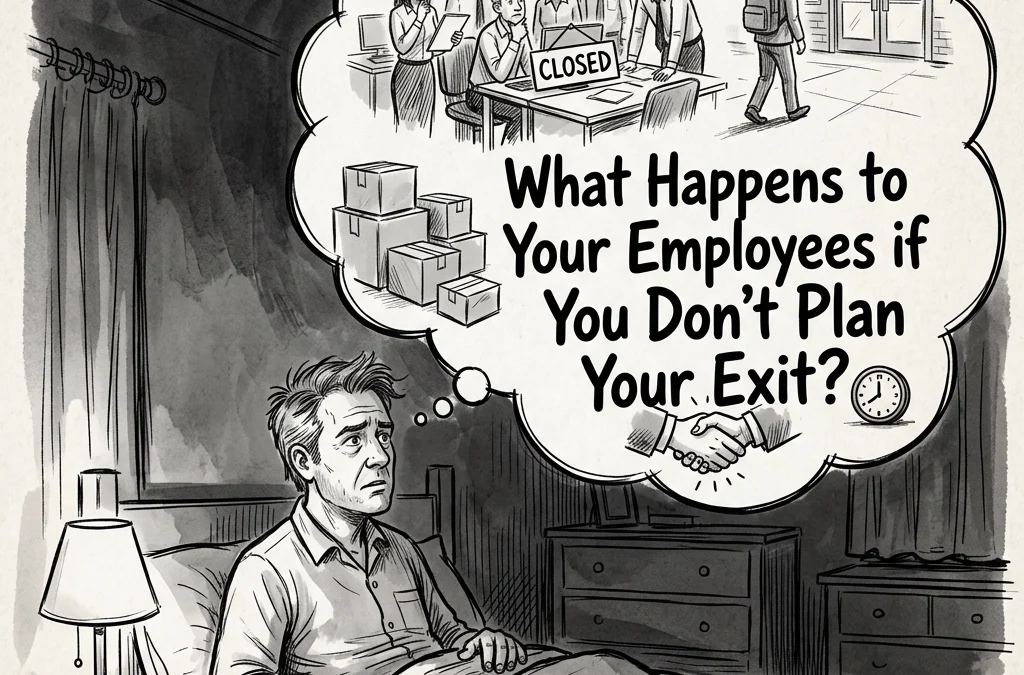
It’s 3:00 AM.
You’re staring at the ceiling, and for once, you aren’t thinking about your margins or that late shipment from overseas. You’re thinking about Sarah in sales. You’re thinking about Joe, who’s been your warehouse manager for fifteen years. You’re thinking about the twenty, fifty, or five hundred families that rely on your signature appearing on a paycheck every two weeks.
Then the question hits you: What happens to them if I don’t show up tomorrow?
Most business owners treat exit planning like a math problem. They focus on the valuation, the tax implications, and the final payout. They treat the "human element" as a footnote.
That is a massive mistake.
If you don't have a plan for your exit, you don't have a plan for your people. And if you don't have a plan for your people, you are essentially gambling with their mortgages, their kids' tuition, and their peace of mind.
I’m Mike Steward, and I’m here to tell you the blunt truth: Your silence is not protection. It is a ticking clock.
The Delusion of "Protecting" the Team
I hear it all the time. "Mike, I don't want to talk about selling because I don't want to spook the staff. I want to keep things stable."
Let’s dismantle that delusion right now.
Stability isn't the absence of change. Stability is the presence of a plan.
When you keep your exit intentions a secret until the day the "Sold" sign goes up, you aren't protecting your team. You are ambushing them. You are leaving them to wonder if the new owner is a hatchet man or a healer. You are forcing them to update their resumes in a panic instead of transitioning with confidence.
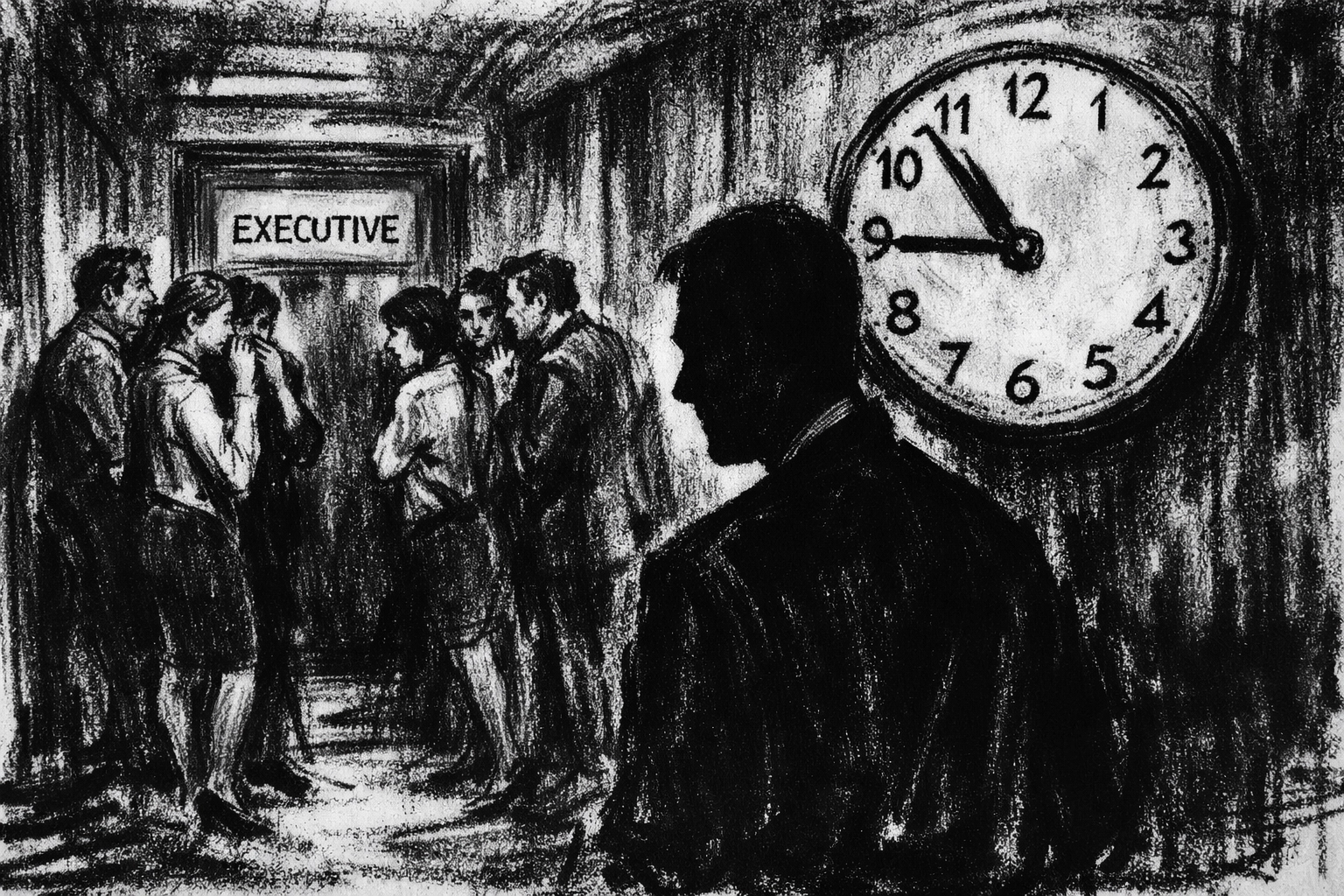
The Four Horsemen of the Unplanned Exit
When you refuse to plan your exit, you invite four specific disasters into your company culture. These aren't theories; they are the lived realities of businesses that wait too long.
1. The Loss of Organizational Stability
Without a proactive plan, the business enters a state of operational chaos the moment you step back. If every major decision requires your "OK," the company parlyzes when you're gone.
The Hard Truth: If the business can't run without you, it isn't a business. It’s a high-stress job you created for yourself, and you’ve trapped your employees in it.
2. Declining Morale and High-Level "Leakage"
Your best people aren't stupid. They can feel the shift in your energy. They notice when you start checking out or when the growth plateaus.
When employees sense uncertainty, the A-players leave first. Why? Because they have options. They won't wait around to see if the ship sinks; they’ll hop on a lifeboat while the sun is still out. You’re left with the B and C-players who couldn't find a job elsewhere.
3. The Institutional Knowledge Drain
This is the silent killer. Think about all the "unwritten rules" in your head.
- How to handle that one difficult vendor.
- Why the software glitches on Tuesdays.
- Which customers need a personal touch to pay their invoices.
If you haven't documented your processes or built a leadership tier that can function without you, that knowledge evaporates the second you walk out the door. The employees left behind are left holding a puzzle with half the pieces missing.
4. The Threat of Total Closure
In the worst-case scenario: an unexpected death or illness: the lack of an exit plan often leads to a fire sale or a total shutdown.
If there is no designated successor and no clear path forward, the bank or the estate might decide it’s easier to liquidate the assets than to keep the lights on. That’s dozens of people out of work because you were too "busy" to write a plan.
Your Ego vs. Their Mortgage
Let’s talk about the "Hero Complex."
Many owners love being the person who saves the day. You love that the staff comes to you for answers. It makes you feel important. It makes you feel essential.
But being essential is a failure of leadership.
If you are essential, you are a bottleneck. If you are a bottleneck, you are a risk.
True leadership in the context of an exit means making yourself irrelevant. It means building a transferable business that can thrive under someone else's guidance.
When you refuse to empower your managers or document your systems, you are choosing your ego over their long-term job security. That’s a hard pill to swallow, but it’s the truth.

What the Buyer Sees (And Why It Costs You)
Let’s look at this through a cold, financial lens for a second.
When a sophisticated buyer looks at your business, they aren't just buying your equipment or your customer list. They are buying your team.
If a buyer sees a team that is terrified, disorganized, or overly dependent on the owner, they see risk.
- High Risk = Lower Valuation.
- High Risk = Aggressive Earnouts.
- High Risk = A Dead Deal.
A buyer wants to see a "plug-and-play" leadership team. They want to know that if you go sit on a beach in Hawaii, the business will keep churning out profit. If you haven't planned your exit, you haven't built that team. You’re asking a buyer to take a gamble on a group of people who are likely to quit the moment the transition gets rocky.
If you want to maximize what you take home, you have to ensure your people are taken care of long before the negotiation starts.
The "Before the Clock Decides" Approach to Succession
Exit planning isn't something you do six months before you retire. It’s something you should have been doing since the day you started. But since we can't change the past, we start today.
Here is how you actually protect your team:
- Stop Being the Answer Man: Start responding to questions with "How would you handle it?" Give your team the authority to make mistakes while you’re still there to catch them.
- Document Everything: If it’s not in writing, it doesn’t exist. Create a culture where processes are documented so the business becomes a machine, not a cult of personality.
- Identify the "Key Man" Risks: If Joe in the warehouse is the only one who knows the inventory system, Joe is a risk. Cross-train your staff.
- Communicate (Carefully): You don't have to announce a sale date, but you should talk about the "future of the company." Share the vision of a company that is built to last beyond any one individual.

The Legacy You Leave Behind
When people talk about "legacy," they usually think of a name on a building or a plaque in the lobby.
In the world of small and mid-sized business, legacy is simpler. Your legacy is the continued employment and prosperity of the people who helped you build your dream.
If you exit and the company thrives for another twenty years, you succeeded. If you exit and the company collapses in six months, you failed: no matter how much money you walked away with.
The clock is ticking. You can decide now to build a transition that honors your team, or you can let the clock decide for you, leaving them to pick up the pieces of a broken business.
Don't wait until the 3:00 AM questions become 9:00 AM realities.
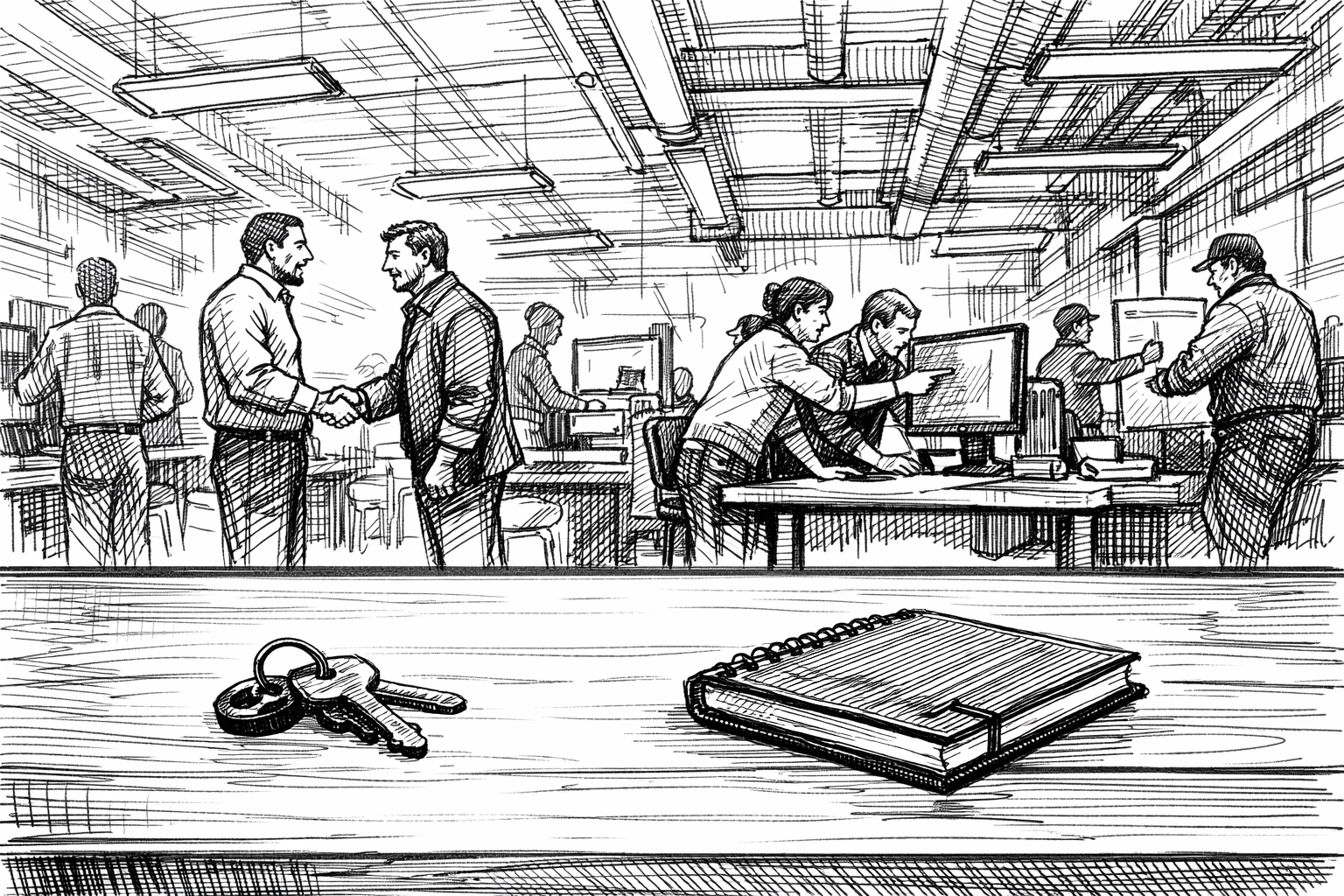
Your Move
You’ve spent years building this. Don't let the final chapter be a tragedy for your employees.
- First Step: Audit your "Owner Dependency." Write down five things only you know how to do.
- Second Step: Assign those five things to a team member by the end of this week.
- Third Step: Get a professional perspective on your transition. Look through our free resources or pick up a copy of my book, Before the Clock Decides, to start mapping out a plan that protects your legacy and your people.
Your team has had your back for years. It’s time you had theirs.
Plan your exit. Before the clock decides.