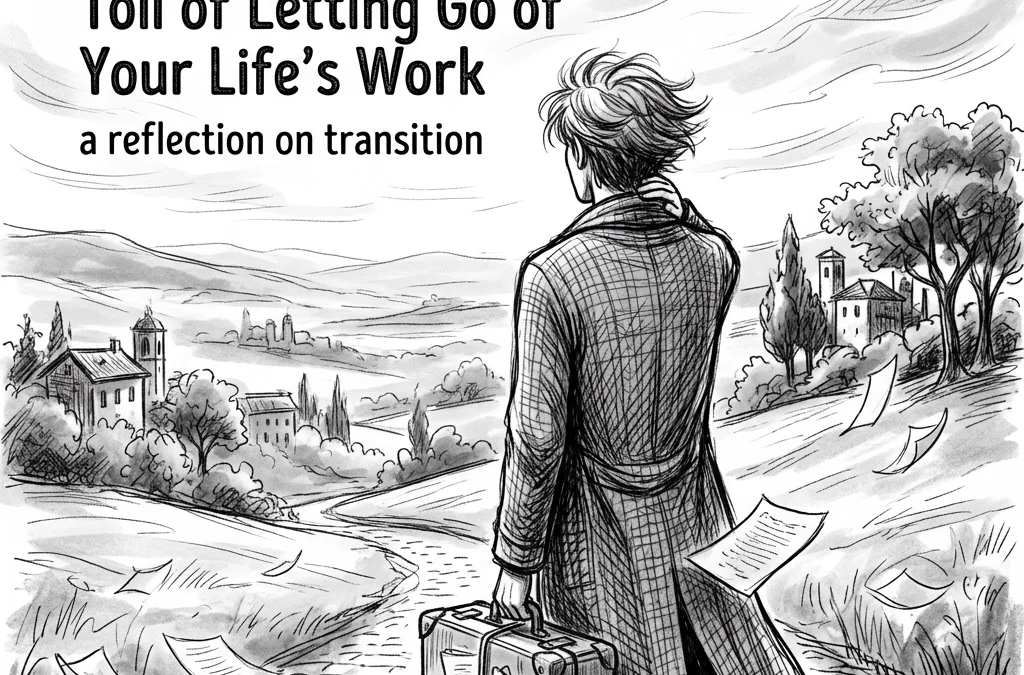
You think the hardest part of selling your business is the due diligence.
You think it’s the legal red tape, the tax implications, or finding a buyer who won't strip the gears of the machine you built.
You’re wrong.
The hardest part isn't the deal. It’s the funeral.
Specifically, the funeral for the person you have been for the last twenty, thirty, or forty years.
When you spend decades as "The Boss," "The Founder," or "The Owner," those titles aren't just descriptions on a business card. They are the scaffolding of your ego. They are how you tell the world: and yourself: that you matter.
But what happens when the scaffolding is removed?
Most owners don't prepare for the silence. They prepare for the check. Then the check clears, the keys are handed over, and they wake up on Monday morning with nowhere to be.
That is when the hidden emotional toll begins to collect its debt.
The Identity Trap: Who Are You Without the Desk?
Most entrepreneurs are "high-functioning" by nature. You have spent your life solving problems and moving the needle.
Your work has provided you with a sense of identity, comfort, and security. It has been your anchor.
When you release the business, you aren't just stepping away from tasks. You are confronting a fundamental shift in how you see yourself.
If you are no longer the one making the decisions, who are you?
If you aren't the one people call when things go wrong, do you still have value?
This is where the crisis of self-worth begins. Many owners realize too late that their personality was entirely consumed by their professional role. They didn't just run the business; they were the business.

If your self-worth is tied to your net worth or your professional output, an exit feels like a subtraction. It feels like you are becoming "less than."
The truth: If you don't define yourself outside of your business before you sell, the market will define you by your absence after you sell.
The Mirror Test: Diagnostic Questions
Ask yourself these questions. Be honest. There is nobody else in the room.
- What breaks if you disappear for three months? If the answer is "everything," you aren't an owner; you’re a prisoner.
- Who calls you when they don't want something from you? If your entire social circle is composed of employees, vendors, and clients, you are heading for a lonely exit.
- What is the first thing you say when someone asks, "What do you do?" If you can’t answer without mentioning the company, your identity is fully merged.
If these questions make you uncomfortable, good. That discomfort is the indicator that you are under-prepared for the psychological weight of the transition.
You can find more diagnostic tools in our free resources section to help you gauge your readiness.
Grief Is a Silent Partner in Every Deal
We talk about selling a business as a "win." We celebrate the exit. We pop champagne.
But humans are naturally resistant to the pain associated with loss. And make no mistake: an exit is a loss.
There is genuine grief involved in letting go of your life's work. It follows the same stages as any other loss:
- Denial: "I'll stay on as a consultant for five years. I'll still be in the loop." (You won't.)
- Anger: "The new owners are ruining the culture. They don't know what they're doing."
- Bargaining: "Maybe I should have kept 10% of the equity."
- Depression: The "Monday Morning Syndrome" where the lack of purpose feels heavy.
- Acceptance: Realizing the business is a chapter, not the whole book.
Bottling up these feelings doesn't make them go away. It only prolongs the suffering.
If you’ve spent your career suppressing emotion to remain "professional," the dam usually breaks about three months after the sale. You find yourself angry at your spouse, bored with your hobbies, or obsessively checking your old company’s LinkedIn page.
You cannot skip the grief. You can only go through it.

The "I'm Not Ready" Myth
Owners often say they aren't "ready" to sell because the "numbers aren't quite there" or the "market is soft."
Usually, that’s a lie.
The reality is that they are terrified of the uncertainty. Humans are wired to seek stability. Even a stressful, soul-crushing job is "familiar." The unknown of retirement or a "second act" is a void.
It is easier to remain in a stagnant, exhausting situation than to face the uncertainty of change.
Waiting isn't a strategy. It's a delay tactic.
The longer you wait to plan your emotional exit, the more power the clock has over you. Eventually, the clock decides for you: whether through health issues, market shifts, or simple burnout.
By then, you aren't exiting with intention. You are escaping. There is a massive difference in the emotional outcome between the two.
High-Functioning Stress and the Productivity Trap
If your career has been tied to high-functioning stress patterns, your brain is addicted to cortisol and adrenaline. You are used to the "rush" of the deal and the "hit" of the solve.
When you exit, the supply of those chemicals is cut off.
Suddenly, your brain doesn't know what to do with the quiet. You might feel restless, irritable, or "itchy." You might try to jump into a new venture immediately just to get that feeling back.
This is the "Productivity Trap."
You believe your worth is determined by how much you produce. When you stop producing, you feel worthless.
To survive the exit, you have to decouple your "doing" from your "being." You have to learn how to exist without a task list.
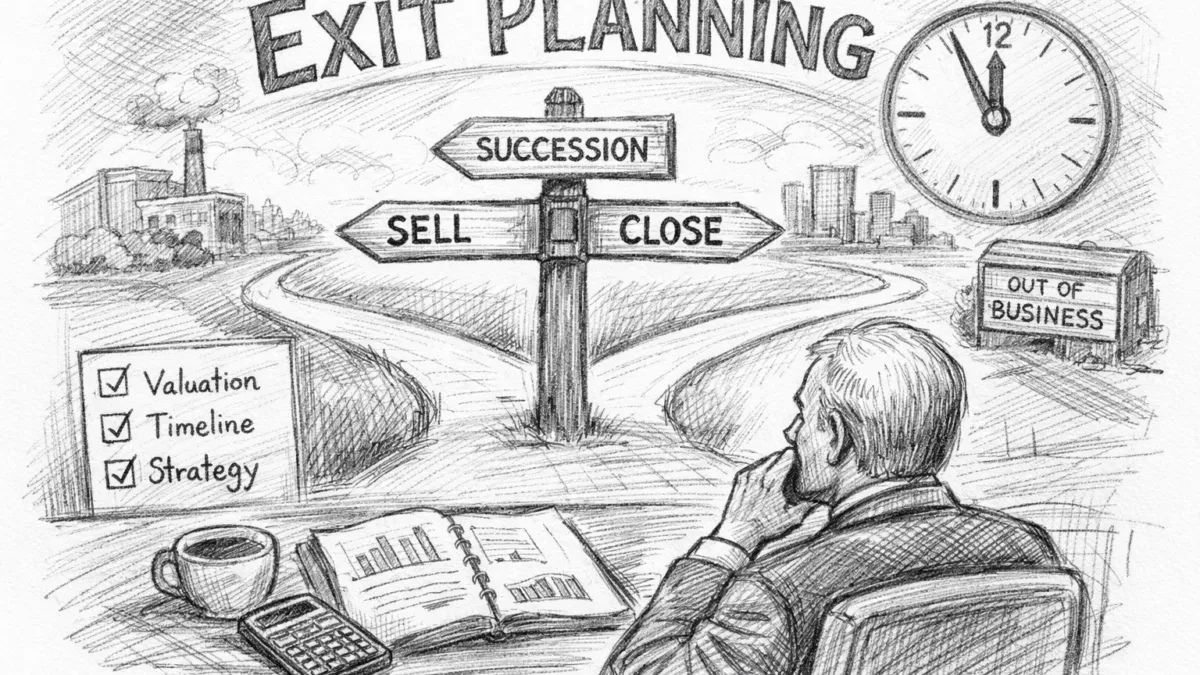
The Ego and the Valuation
This emotional attachment doesn't just hurt your head; it hurts your wallet.
Ego is the primary reason businesses don't sell. Owners value the company based on their "sweat equity" and the sacrifices they made.
- "I worked 80 hours a week for twenty years!"
- "I missed my kids' birthdays for this!"
- "This company is my legacy!"
The buyer doesn't care.
A buyer is purchasing future cash flows and mitigated risk. They aren't paying you for your memories or your sacrifices. When you let your ego drive the valuation, you set a price the market won't pay.
Then, when the business doesn't sell, you feel rejected. You feel like the world is telling you that your life's work wasn't important.
Negative Definition: A business valuation is not a judgment on your character. It is a mathematical calculation of a financial asset.
If you can’t separate those two things, you will never have a successful exit. You can read more about this mindset in Mike Steward's books.
The Path Forward: How to Detach Without Breaking
You don't just "get over it." You have to actively process the transition.
- Acknowledge the weight. Stop pretending it’s "just business." It’s personal. Acknowledge that you are losing a part of yourself.
- Build a "Life After" plan before the "Exit" plan. What will you do on Tuesday at 10:00 AM? If you don't have an answer, don't sign the papers yet.
- Diversify your identity. Start a hobby where you are a "beginner." It humbles the ego and reminds you that you are more than your professional title.
- Find a "Transition Tribe." Talk to other owners who have sold. Not the ones who brag about the price, but the ones who are honest about how hard the first year was.
- Seek support. Whether it’s coaching, journaling, or a peer group, you need a safe space to explore the "what now?" question.
If you are struggling to see the forest through the trees, it might be time to work with Mike. Having an objective third party to guide you through the emotional minefield is often the difference between a bitter exit and a meaningful one.

Your Move
The clock is ticking. It doesn't care about your feelings, your legacy, or your fear of the unknown. It only moves forward.
You can choose to face the emotional toll now, on your terms, or you can let it hit you all at once when the office door locks behind you for the last time.
Do this today: Take thirty minutes. No phone. No computer. Just a notepad. Write down who you are if your business ceased to exist tomorrow.
If the page is blank, you have work to do.
Don't wait until you're forced to figure it out. Start planning your intentional transition now.
Check out our resources to begin the process of letting go( before the clock decides for you.)