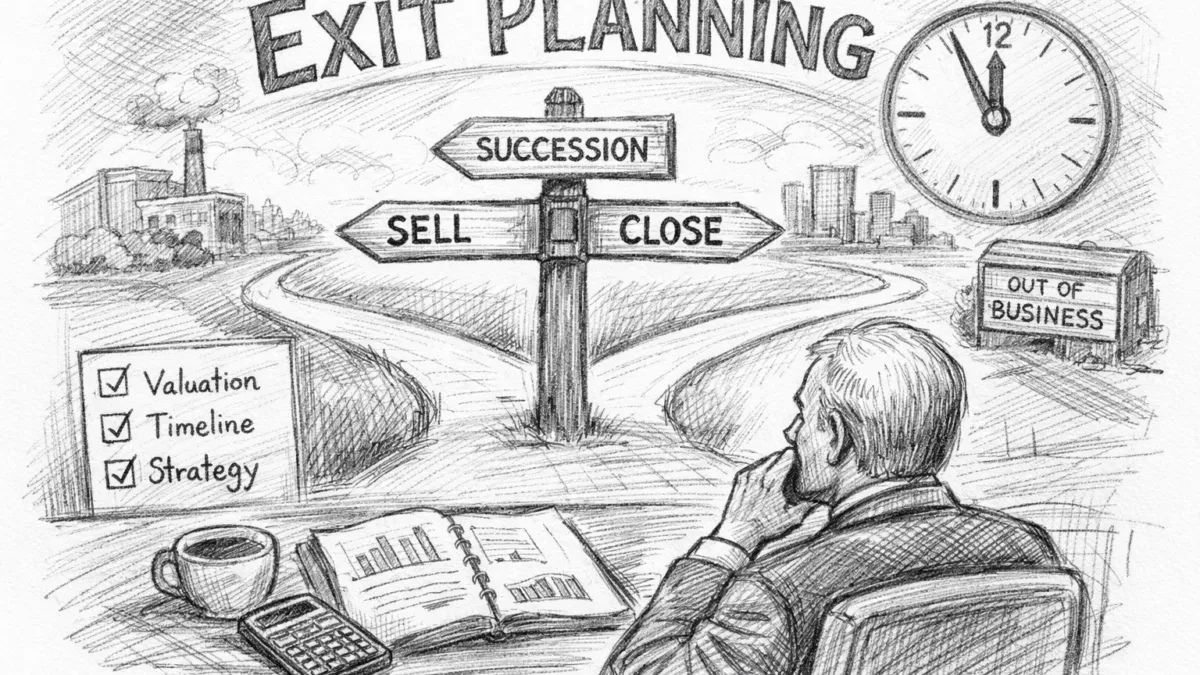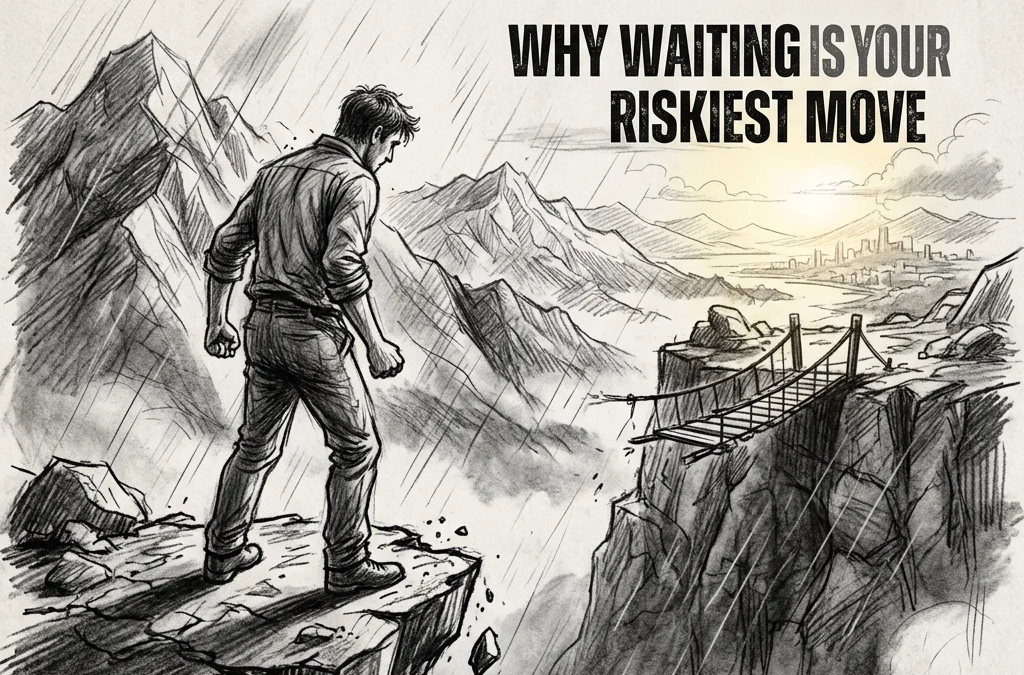
"I'm not ready yet."
It is the most expensive sentence in the English language.
Business owners say it like it’s a virtue. They think it sounds like "prudence" or "patience." They believe they are waiting for the perfect moment, the perfect market, or the perfect EBITDA.
They aren't.
They are hiding.
The "I'm not ready yet" trap is a psychological bunker. It feels safe, but the walls are closing in. While you wait to feel "ready," the world keeps moving. Markets shift. Buyers disappear. Your health wavers.
Waiting isn't a strategy. It's a gamble where the house always wins.
The Lie of "One More Year"
Most owners have a magic number in their heads.
"I’ll sell when we hit $10M in revenue."
"I’ll step back once the new manager is fully trained."
"I’ll think about an exit next year when things calm down."
Here is the hard truth: Things never calm down.
When you hit $10M, you’ll want $15M. When that manager is trained, they’ll quit for a better offer. The "one more year" cycle is a treadmill that only stops when you fall off.
You think you are waiting for a better price. You are actually waiting for permission to stop being a "Business Owner." You’ve tied your identity so tightly to the company that letting go feels like dying.
But staying too long is how businesses actually die.
Preparation vs. Progress
There is a massive difference between preparing to sell and waiting to sell.
Preparation is active. It’s building a business that runs without you. It’s cleaning up the books. It’s documenting systems.
Waiting is passive. It’s doing the same thing you did yesterday and hoping the "right time" hits you like a lightning bolt.
The psychological comfort of "getting ready" often becomes a substitute for actually doing the work. You spend months agonizing over the color of the pitch deck but zero hours building a leadership team that can survive your absence.
If you aren't ready to sell today, you aren't running a business. You’re holding a job.

What Breaks If You Disappear?
Ask yourself these diagnostic questions. Don't lie to yourself.
- Can you take a 30-day vacation without checking your email?
- If you were incapacitated tomorrow, would your payroll get met?
- Do your customers call the office, or do they call your cell phone?
If the answer to any of these makes you sweat, you are in the trap. You think you aren't "ready" to sell because the business isn't ready. And the business isn't ready because you’ve made yourself the bottleneck.
This is the exit delusion. You believe that by staying, you are protecting the value. In reality, every day you remain the "key man," the value of your business plateaus or drops in the eyes of a sophisticated buyer.
The Market Doesn’t Care About Your Feelings
You might not be ready, but the market might be.
Right now, there are buyers with cash. There are competitors looking to expand. There are interest rates that make deals possible.
You don't control these variables.
If you wait two years until you feel ready, the economy might be in a ditch. Your industry might be disrupted. Your top three customers might leave.
Waiting is a surrender of control.
When you wait for the "perfect" time, you are letting the clock decide your future. When you start exit planning early, you retain the power to say "no."
The best time to sell is when you don't have to. The worst time to sell is when you are forced to by burnout, illness, or a market crash.
The Math of the Delay
Let’s look at the "locker room" pragmatism of waiting.
Imagine your business is worth $5M today. You decide to wait three years to "grow it" to $7M.
In those three years:
- You take on three more years of personal liability.
- You risk a market downturn that could drop your $5M valuation to $3M.
- You lose the "opportunity cost" of what that $5M could have earned in a diversified portfolio.
If you sell today for $5M and invest it at a conservative 7%, you have $6.1M in three years without lifting a finger or worrying about a broken HVAC system at the warehouse.
Is the extra effort and massive risk worth the potential (not guaranteed) extra $900k? Usually, the math says no.
Your Business Is Not Your Baby
We need to kill the "baby" metaphor.
A baby is a person. A business is an asset.
If you treat your business like a child, you will make emotional, irrational decisions. You will keep "feeding" it long after it should have been out on its own.
You need to view your company as a product. Your job as the founder was to build the product. Now, your job is to sell the product to the next user.
Why selling your business feels harder than it should is simple: you’ve confused your net worth with your self-worth.
You aren't "not ready" to sell the business. You’re "not ready" to be "Former CEO."
That is an ego problem, not a business problem.

The "Black Swan" Risk
The most dangerous part of the "I'm not ready" trap is the assumption that you have infinite time.
I have seen it dozens of times. An owner says they’ll wait two years. Six months later, they get a diagnosis. Or their spouse gets sick. Or their partner wants out.
Suddenly, they aren't an "Owner looking for a transition." They are a "Motivated Seller."
In the world of M&A, "motivated" is code for "discounted."
Buyers smell blood. They know you need to exit. The price drops. The terms get worse. The legacy you spent thirty years building gets sold for scrap because you waited for a "ready" that never came.
Waiting too long is the most expensive mistake you can make.
How to Break the Cycle
You don't need to feel ready. You just need to be prepared.
- Get a Real Valuation: Stop guessing what your business is worth based on what your buddy sold his for. Most owners get it wrong. Get a hard number.
- Audit Your Role: List everything you do. If it’s more than "Strategy and Culture," start delegating.
- Set a "Drop Dead" Date: Pick a date on the calendar. Not a goal, a date. On that date, you begin the process, regardless of how you "feel."
- Read the Map: Understand the path. Read Before the Clock Decides to see the traps before you step in them.
Your Move
The clock is already ticking. It doesn’t care about your hesitation. It doesn’t care about your "one more year."
You can decide your exit now, while you have the leverage, the health, and the options. Or you can wait until the choice is made for you.
The "I'm not ready" trap is only a trap if you stay in it.
- Audit your involvement: What breaks if you leave for two weeks? Fix that first.
- Get the book: Stop flying blind and learn the mechanics of a real exit.
- Talk to a pro: Stop talking to your mirror and start talking to someone who knows the market.
Don't wait for "ready." Build "ready."
Start exit planning before you're ready. It’s the only way to win.