Many business owners start with a simple goal:
Build something successful.
Over time, something unexpected happens.
The business grows.
Customers multiply.
Employees depend on you.
And gradually, without meaning to, the business becomes completely dependent on you.
You approve the decisions.
You manage the relationships.
You solve the problems.
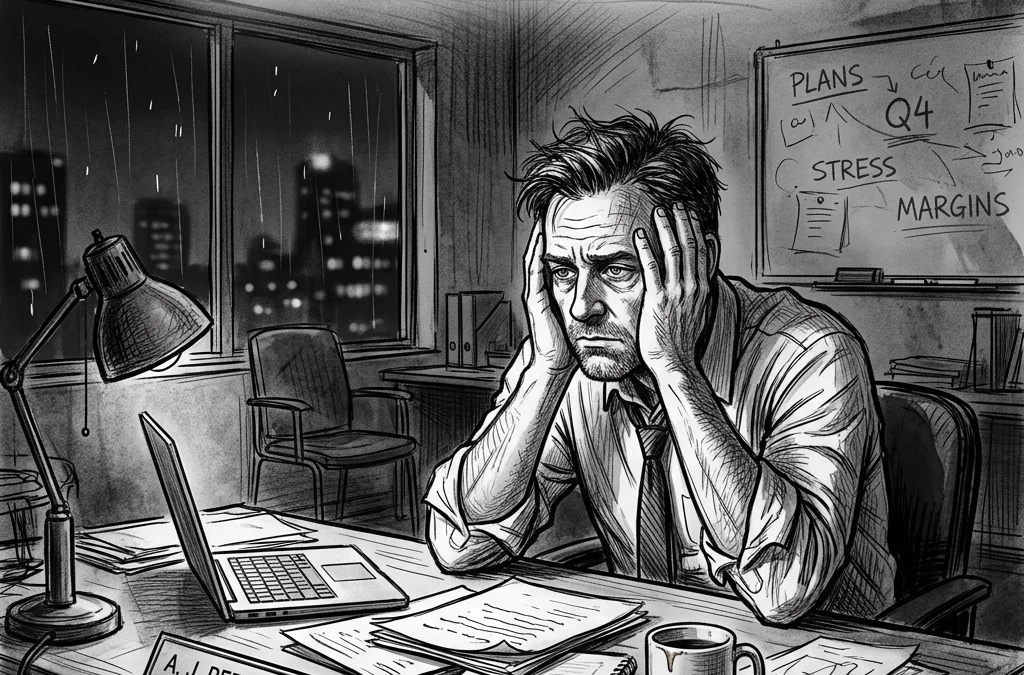
Success begins to feel heavy.
The Owner Dependency Trap
Owner dependence is one of the most common challenges in small and mid-sized businesses.
It often shows up quietly:
-
Employees wait for your approval.
-
Customers call you directly.
-
Key knowledge lives in your head.
-
Major decisions pause when you’re unavailable.
At first it feels normal.
After all, you built the company.
But over time it creates a hidden problem:
The business cannot fully function without you.
That limits both your freedom and the company’s long-term value.
A Better Goal: Owner-Optional
An owner-optional business does not mean the owner disappears.
It means the company can operate successfully whether the owner is present or not.
That difference matters.
When a business becomes owner-optional:
-
Leadership decisions are distributed.
-
Processes are documented.
-
Teams operate with autonomy.
-
The owner focuses on strategy instead of daily operations.
The company becomes stronger and more resilient.
Why This Matters Even If You Never Sell
Many owners assume this kind of structure only matters when preparing for a sale.
It actually improves daily life.
When your business runs without constant intervention:
You can step away for a week without anxiety.
You can focus on growth instead of firefighting.
You can spend more time thinking instead of reacting.
Ironically, the companies that sell most successfully are usually the ones that don’t need the owner as much anymore.
If you’re curious how operational structure affects future selling options, you can review how the selling process works here:
https://visionfox.com/business-brokerage/
But even if you never sell, the benefits are real.
The First Steps Toward Owner Independence
Building an owner-optional business doesn’t happen overnight.
It begins with small structural improvements.
Document Key Processes
If your team had to train someone new tomorrow, would they know how the company runs?
Documenting systems makes knowledge transferable.
Develop Second-Layer Leadership
Every strong business eventually develops leaders who can make decisions independently.
When employees grow into leadership roles, the owner gains flexibility.
Clarify Decision Authority
Many organizations unintentionally route every decision through the owner.
Defining who can approve what removes friction and increases speed.
Track the Right Metrics
Leaders make better decisions when they understand the numbers that drive the business.
Clear metrics create accountability and visibility.
The Hidden Benefit
When owners start building a business that can run without them, something interesting happens.
The company often grows faster.
Because now the owner is free to think strategically instead of managing every small detail.
Freedom creates perspective.
Perspective creates better decisions.
A Simple Question
Here’s a useful exercise for any owner.
Ask yourself:
If I disappeared for 60 days, what would break first?
The answer usually reveals exactly where the business still depends too heavily on you.
Those areas become your roadmap for improvement.
Strength Creates Options
An owner-optional business gives you something most entrepreneurs value deeply:
Choice.
You can keep running the company.
You can step back into a leadership role.
You can pursue new opportunities.
You can eventually sell from a position of strength.
The goal isn’t to leave your business.
The goal is to build one strong enough that you don’t have to carry it alone.
And that kind of strength creates freedom long before the clock decides.
Published by the Vision Fox Advisory Team — helping business owners build stronger companies, clearer strategies, and better exit options.