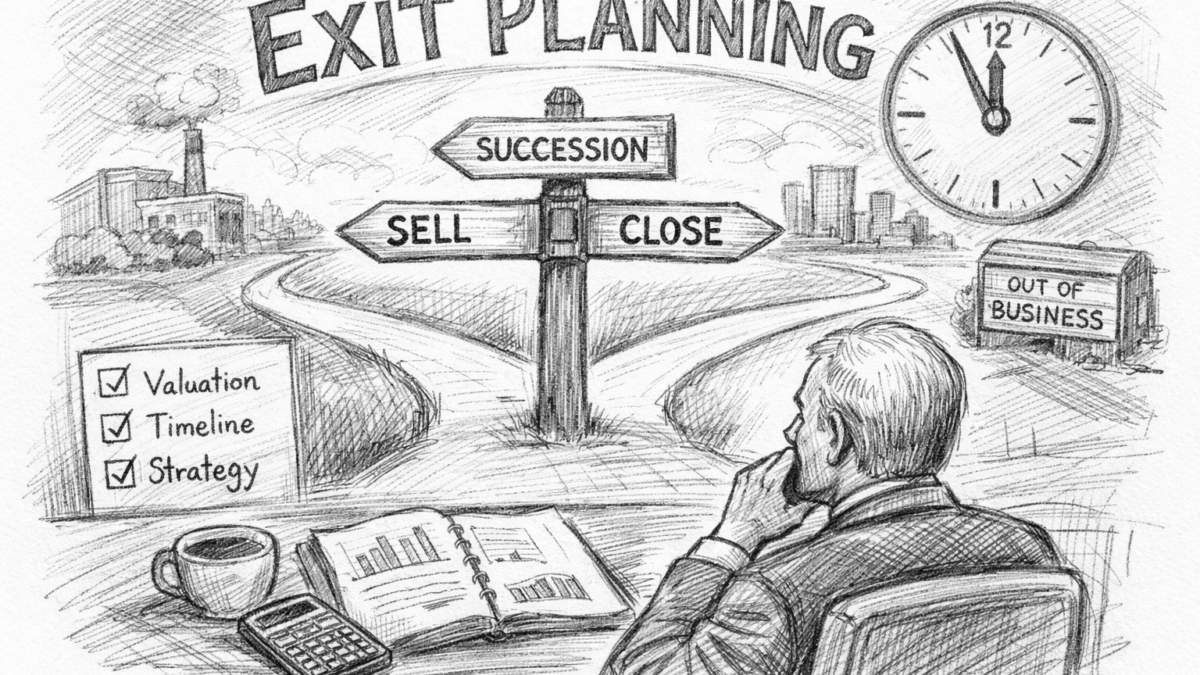
Most owners think exit planning begins when they’re ready to sell.
It doesn’t.
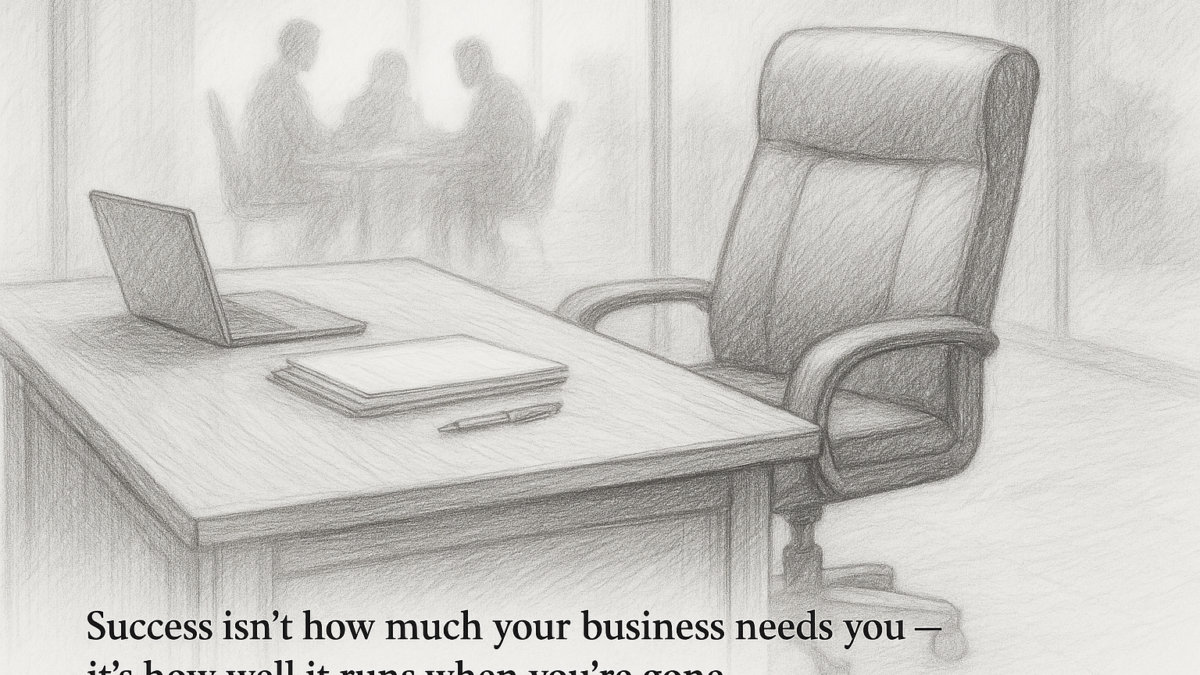
It begins when you realize your business won’t last forever — at least not in your hands.
Every business exits one of three ways: sale, succession, or shutdown. The only real variable is whether that exit happens on your terms or someone else’s.
Exit planning isn’t about walking away.
It’s about protecting your options before they narrow.
The Quiet Risk of Waiting
Owners rarely avoid exit planning because they’re careless.
They avoid it because:
-
The business is still growing.
-
There’s no immediate pressure.
-
Selling feels permanent.
-
The future feels far away.
So planning gets labeled “later.”
But later has a habit of arriving early.
Health changes. Markets shift. Key employees leave. Energy fades. What once felt stable can feel fragile faster than expected.
Waiting without a plan doesn’t preserve control.
It slowly erodes it.
What Exit Planning Actually Is
Exit planning is not listing your business.
It’s not committing to sell.
It’s not accelerating a decision you’re unsure about.
It’s simply answering three foundational questions:
-
What is my business worth today?
-
What drives that number?
-
What would need to improve if I wanted to exit in 2–5 years?
Clarity comes before action.
When owners gain visibility into those answers, decisions stop feeling emotional and start feeling structured.
If you want to understand how structured exit planning works in practice, you can review the framework here:
https://visionfox.com/business-brokerage/
Planning doesn’t force action.
It restores optionality.
Why Most Owners Wait Too Long
There’s a psychological barrier most people don’t talk about.
Deciding feels irreversible.
If you look at the numbers and they’re lower than expected, that stings.
If you discover you’re more owner-dependent than you thought, that’s uncomfortable.
If you realize you may need three more years to optimize value, that requires patience.
So many owners avoid the conversation entirely.
But avoidance doesn’t protect value. Preparation does.
The earlier you look, the more leverage you preserve.
The Three Levers Exit Planning Protects
1. Timing
Prepared owners choose when to explore the market.
Unprepared owners react to events.
Exit planning ensures that if something unexpected happens, you’re not starting from scratch.
2. Value
Most value erosion happens quietly:
-
Customer concentration grows.
-
Margins compress.
-
Owner dependence increases.
-
Systems remain undocumented.
A structured plan surfaces those issues early — while there’s still time to fix them.
Small improvements compound over time.
3. Emotional Control
Selling under pressure feels different than selling from intention.
Owners who plan early report something simple but powerful:
They sleep better.
Not because they’re selling — but because they know they could.
That shift changes how you lead, hire, negotiate, and grow.
Exit Planning Is Permission to Wait Intentionally
There’s nothing wrong with staying in your business.
In fact, many owners who begin exit planning decide not to sell for years.
The difference is this:
They’re not drifting.
They’re building.
Prepared waiting is strength.
Unintentional waiting is risk.
Exit planning turns delay into strategy.
A Better Question to Ask
Instead of asking:
“Should I sell?”
Ask:
“If I wanted the option to sell in three years, what would I need to improve starting now?”
That question changes everything.
It moves you from emotion to engineering.
The Calm Approach
You don’t need urgency.
You don’t need a buyer lined up.
You don’t need to be “ready.”
You need visibility.
Exit planning is simply choosing to look before the clock decides for you.
And the earlier you look, the more freedom you keep.
Published by the Vision Fox Advisory Team — helping business owners across the U.S. get clear on value, growth, and exit options.