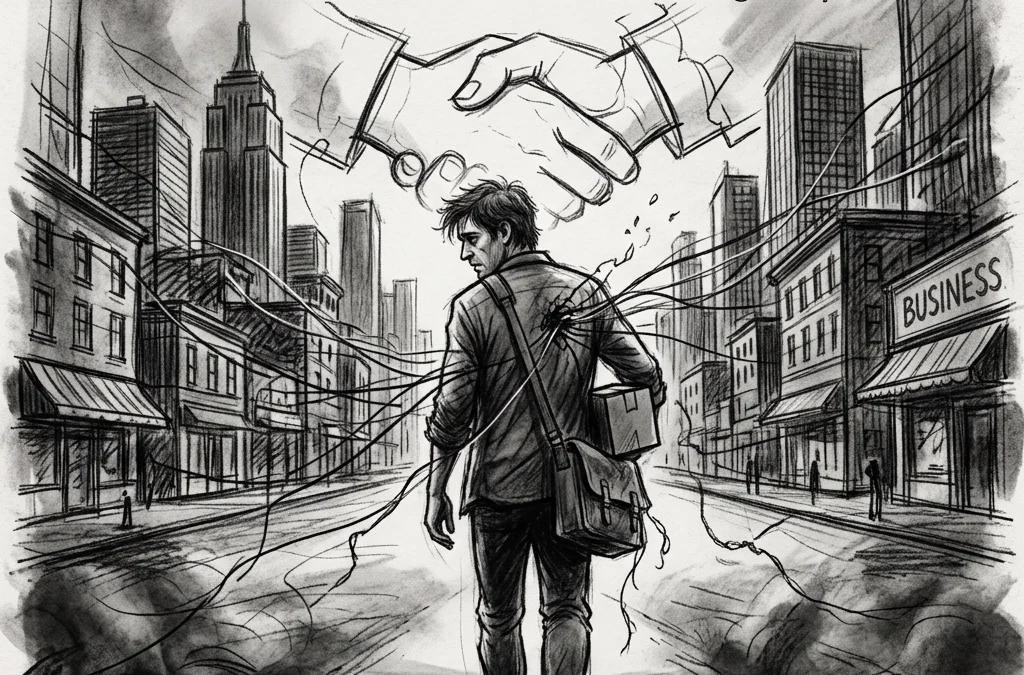
You’ve spent twenty years building a kingdom.
You are the first one in and the last one out. Your phone rings at 10:00 PM because you’re the only one who can fix the crisis. Your employees look to you for direction. Your vendors respect your signature. Your community knows you as "the person who owns the place."
Then, you sign a piece of paper. The wire hits your bank account.
And suddenly, you are nobody.
That is the emotional gut-punch of the exit. It’s the part of the brochure nobody wants to talk about because it isn’t about multiples, EBITDA, or tax mitigation. It’s about the fact that you’ve mistaken your business for your heartbeat.
If you don’t untangle your identity from your balance sheet before you sell, the "best day of your life" will quickly turn into a psychological freefall.
The Addiction to Being "The Boss"
Let’s be honest: being the boss feels good.
It’s an ego trip that lasts decades. You are the center of the universe. Every decision flows through you. Every success is a validation of your intelligence and grit.
But that high comes with a price. When you are the business, the business cannot exist without you. And if the business cannot exist without you, it isn't an asset, it’s a high-paying job that you can't quit.
Most owners are addicted to being needed.
They say they want freedom, but they secretly love the chaos. They love being the hero who saves the day. When you sell, you aren't just giving up the headaches; you’re giving up the heroics.
What happens when the phone stops ringing? What happens when you walk into your old office and someone else is sitting in your chair, making "wrong" decisions that you aren't allowed to correct?
If your self-worth is tied to your title, you are headed for a crisis.
The "Set Adrift" Phenomenon
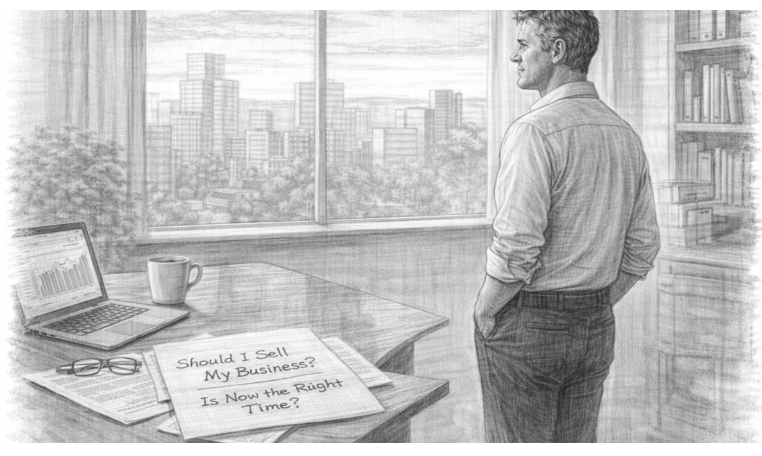
Research shows that many entrepreneurs experience a profound sense of purposelessness after an exit. They describe it as feeling "set adrift."
It’s a literal identity crisis.
You’ve spent years prioritizing work over hobbies, family, and health. You’ve sacrificed everything to build the machine. When the machine belongs to someone else, you realize you forgot to build a life outside of it.
This isn't just "post-retirement blues." It’s a mourning process.
Exiting a business is a death.
It is the death of a version of yourself. If you haven't prepared for who comes next, you will spend your first year of "freedom" depressed, staring at a bank balance that doesn't feel as good as you thought it would.
I’ve seen it happen dozens of times. An owner sells for a massive number, goes to Florida for two weeks, gets bored out of their mind, and starts trying to buy back into the industry just to feel relevant again.
They didn't want the money. They wanted the identity.
Why Your Identity Is Killing Your Valuation
Here is the blunt truth: If you are the identity of the business, your business is worth significantly less to a buyer.
A buyer isn't buying your ego. They are buying a cash-flow engine.
If that engine requires your specific personality, your specific relationships, and your specific 3:00 AM interventions to run, it is a risky investment. The owner-optional business is the only one that commands a premium.
If you disappear tomorrow, what breaks?
- Does the lead flow stop?
- Do the key employees quit?
- Does the culture collapse?
If the answer is "yes," you haven't built a company. You’ve built a monument to yourself. Buyers don't want to maintain your monument. They want a business that earns money while they sleep.
What your business is really worth is inversely proportional to how much it needs you.
The Emotional Due Diligence
You spend months on financial due diligence. You check the taxes, the contracts, and the inventory. But you spend zero hours on emotional due diligence.
You need to ask yourself the hard questions before the "For Sale" sign goes up:
- Who am I without my business card? If you can't answer this without mentioning your industry, you aren't ready to sell.
- What am I running to? Most owners focus on what they are running from (the stress, the taxes, the employees). If you don't have a destination, the exit will feel like an exile.
- Can I handle being "wrong"? The new owner will change things. They will change the logo, the software, and the way the coffee tastes. If that thought makes your blood boil, your ego is still in the driver's seat.

Transitioning From "Founder" to "Former"
The transition doesn't happen at the closing table. It happens in the two years leading up to it.
You have to fire yourself from the daily operations. You have to learn to be a "builder" rather than a "bottleneck." This is the core philosophy behind exit planning starting earlier than you think.
It is a slow decoupling.
Start by taking a one-week vacation where you don't check your email. Then two weeks. If the business survives, you’ve proven it doesn't need you. More importantly, you’ve proven to yourself that the world doesn't end when you aren't in charge.
This is the work.
It’s not just about spreadsheets. It’s about ego management. It’s about recognizing that your business was a project, not a person.
The Danger of the "One More Year" Trap
Many owners delay their exit because they are scared of the void. They tell themselves they are waiting for a better market or a higher valuation.
In reality, they are just scared of being "nobody."
This is the most expensive mistake business owners make. They wait until they are burnt out, sick, or forced out by market changes. By then, the value has cratered.
They stay because the business is a comfortable blanket. But eventually, the clock decides for you. And when the clock decides, it doesn't care about your feelings. It just takes.
You Are Not Your EBITDA
You are a person who happened to build a successful company.
The company is an asset. Like a house or a stock portfolio, it is a tool meant to fund your life, not be your life.
If you want to sell your business without regret, you have to start building your "Post-Exit Self" today.
- Reconnect with the friends you ignored for a decade.
- Find a hobby that has nothing to do with networking.
- Invest in your health so you actually live long enough to spend the money.
The goal isn't just to get a check. The goal is to get your life back.

Your Move
The psychological transition is the hardest part of the exit. Don't do it alone.
- Audit your "Boss Addiction." For the next 48 hours, count how many times you intervene in a decision that your team could have handled. If the number is higher than zero, you have work to do.
- Define your "Post-Exit Purpose." Write down three things you will do with your time that have nothing to do with making money. If you can't find three, you aren't ready to sell.
- Read the blueprint. If you’re struggling to see how the business can survive without you, you need to change your perspective. Grab a copy of Before the Clock Decides and start planning an exit that leaves you whole, not broken.
The clock is ticking. You can decide who you are now, or you can let the market decide for you later.
Choose wisely.