Most owners don’t regret selling their business.
They regret how they sold it.
They regret:
-
Waiting too long.
-
Rushing too fast.
-
Taking the wrong deal.
-
Being unprepared for what came after.
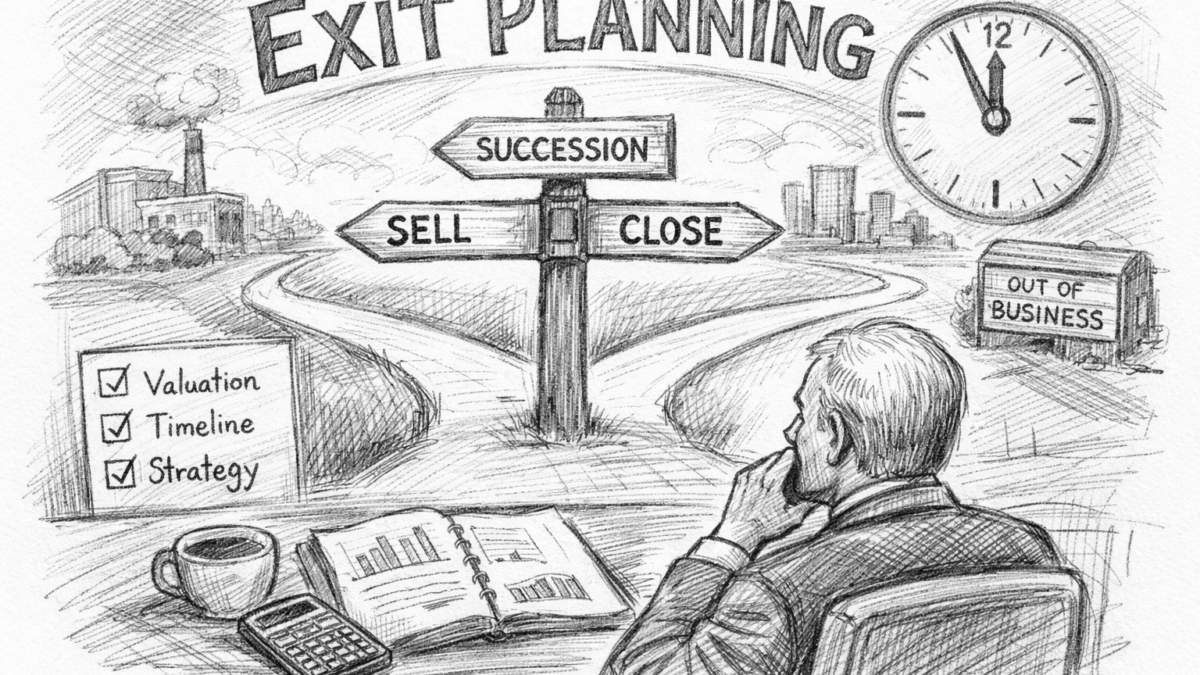
Selling a business is rarely just a financial event. It’s emotional, strategic, and personal — all at once.
If you want to avoid regret, you don’t start with buyers.
You start with clarity.
Step 1: Get Clear on Why You’re Selling
Before you think about multiples or offers, ask yourself:
Why now?
Is it burnout?
Is it boredom?
Is it opportunity?
Is it risk reduction?
Is it family pressure?
There’s no “right” reason to sell. But there is a wrong approach — selling without understanding your own motivation.
Buyers sense uncertainty. So do advisors. If you don’t know why you’re selling, every negotiation feels heavier than it should.
Clarity removes that weight.
Step 2: Know What the Business Is Actually Worth
Many owners anchor to revenue. Or to what a friend sold for. Or to a number they “need” to retire.
The market doesn’t care what you need.
It cares about risk, cash flow, and transferability.
If you haven’t had a real valuation, you’re negotiating blind. That doesn’t mean you must sell — but it does mean you don’t fully understand your leverage.
Owners who are serious about selling their business usually begin with structure and preparation, not listing.
You can see how that process works here:
https://visionfox.com/business-brokerage/
The goal isn’t urgency. It’s visibility.
Step 3: Reduce Owner Dependence
This is where regret often begins.
If the business runs through you — your relationships, your approvals, your expertise — buyers will either:
-
Discount the price, or
-
Demand heavy earn-outs and long transition periods
Neither feels great after signing.
The cleaner the operations, the smoother the exit.
Ask yourself:
-
Could this company run for 60 days without me?
-
Do my financials tell a clean story?
-
Does someone else manage key accounts?
Selling from strength feels different than selling from necessity.
Step 4: Control the Process
The sale process is structured — but it should not feel chaotic.
A disciplined approach includes:
-
Confidential marketing
-
Buyer screening
-
NDA control
-
Structured offers
-
Negotiation management
-
Closing coordination
What most owners underestimate is distraction.
Deals take time. Questions pile up. Financial requests multiply. Employees still need leadership.
If the process is not managed properly, performance dips — and buyers notice.
Control protects value.
Step 5: Prepare for After the Signature
Here’s the part few people talk about.
Selling doesn’t just remove responsibility. It removes identity.
For years, you’ve introduced yourself as:
“I own…”
After closing, that changes.
Owners who sell without thinking about life after the business often feel disoriented — even if the deal was strong.
Regret rarely comes from price alone. It comes from misalignment.
Before you sell, ask:
-
What will my time look like?
-
What role (if any) do I want post-sale?
-
What does “enough” actually mean?
The clearer that picture is, the smoother the transition feels.
The Calm Way to Sell
You don’t need pressure.
You don’t need hype.
You don’t need artificial urgency.
You need:
-
Clear numbers
-
Honest tradeoffs
-
Structured process
-
Optionality
The best exits happen when owners move from intention — not emotion.
Selling your business should feel deliberate.
Not reactive.
Not rushed.
Not forced.
When done well, it’s not the end of something.
It’s the beginning of choice.
Published by the Vision Fox Advisory Team — helping business owners across the U.S. get clear on value, growth, and exit options.