You built it from nothing.
You remember the late nights when the coffee went cold and the bank account hit triple digits, the wrong way. You remember the first big contract. You remember the employees you treated like family.
To you, this business is a lifetime of sacrifice. It is a monument to your grit.
To a buyer, your sacrifice is worth exactly zero dollars.
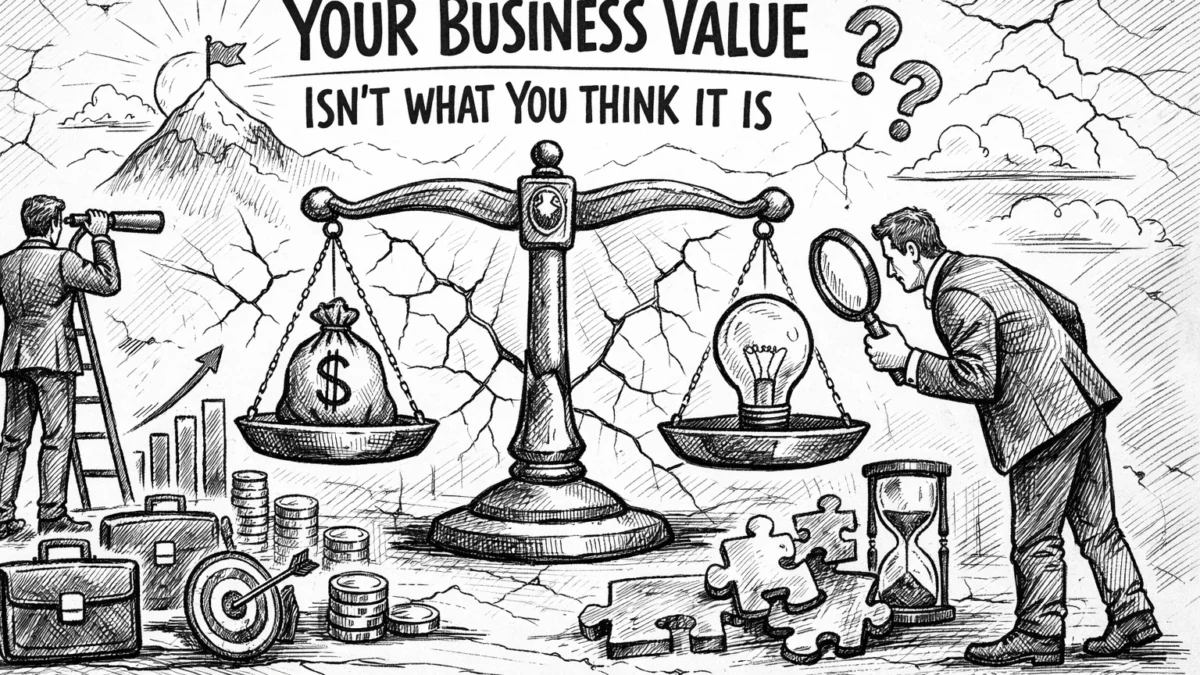
This is the hardest pill to swallow in the world of business exits. There is a massive, jagged canyon between owner sentiment and buyer reality.
If you don't bridge that gap now, the market will do it for you later. And it won't be pretty.
The Sentiment Trap
Most owners value their business based on what they need for retirement or what they feel they earned through years of stress.
They look at the 80-hour weeks and think, "That has to be worth something."
It isn't.
A buyer is not buying your history. They are buying a future stream of cash flow.
They aren't looking at your trophy case. They are looking at your risk profile.
If your business requires your constant presence, your "grit" is actually a liability. You aren't selling a business; you’re selling a high-stress job that you happen to own.
Buyers don't pay for jobs. They pay for systems.
The Cold Calculus of Reality
When you sit down with a firm like Vision Fox Business Advisors, the first thing they do is strip away the emotion. They look at the math.
There are three primary ways the world actually values what you’ve built. None of them care about how tired you are.
1. The Income Lens (Cash is King)
This is about future earnings. If a buyer puts $5 million into your company, they want to know how fast they get it back.
They look at EBITDA (Earnings Before Interest, Taxes, Depreciation, and Amortization). They look at your margins.
If your revenue is growing but your profit is flat, you have a hobby, not a scalable asset.
2. The Market Lens (The Neighbor’s House)
What did the guy down the street sell for?
Market valuation uses multiples. If similar companies in your industry sell for 4x profit, and you think you’re worth 8x because your brand is "special," you’re dreaming.
Unless you can prove your "special" brand translates into predictable, recurring revenue, you are a 4x company.
3. The Asset Lens (The Scrap Value)
This is the floor. If everything goes wrong, what is the equipment, the real estate, and the inventory worth?
For service businesses, this is often a terrifyingly low number. If your value is tied to your people and your reputation, and those people can walk out the door tomorrow, your asset value is essentially the price of your used laptops.

The "Owner-Dependency" Discount
Here is a hard truth: The more the business needs you, the less it is worth.
I call this the Owner-Dependency Discount.
If you are the lead salesperson, the chief problem solver, and the only one with the key to the master file, you have built a cage, not a company.
A buyer sees a "you-dependent" business as a massive risk.
- If you leave, do the customers stay?
- If you stop working, does the process break?
- If you take a month off, does the revenue drop?
If the answer to any of these is "yes," expect a 30% to 50% haircut on your valuation. Or worse, expect the buyer to walk away entirely.
We talk about this extensively in our guide on why most owners get it wrong. You have to become optional to become valuable.
What Breaks if You Disappear?
Ask yourself that question today. Right now.
Don't give the "leader" answer about how much your team loves you. Give the mathematical answer.
- Who handles the billing disputes?
- Who holds the relationships with the top three vendors?
- Who closes the "impossible" deals?
If the name next to those tasks is yours, you are actively devaluing your exit every single day you stay in that role.
You are trading long-term wealth for short-term ego. It feels good to be the hero, but heroes are expensive to replace. Buyers hate expensive replacements.

Why Most Owners Wait Too Long
The gap between your perceived value and the market's reality usually leads to one outcome: Procrastination.
Owners hear a real valuation, get offended, and say, "I'll just work two more years and grow it."
But they don't change the structure. They just do more of the same. Two years later, they are more tired, the market has shifted, and the business is still dependent on them.
They wait until a health crisis, a divorce, or a market crash forces their hand.
By then, they aren't negotiating from a position of strength. They are liquidated at a discount.
The clock doesn't care about your feelings. It only moves forward.

The Vision Fox Factor
Knowing your value isn't about clicking a button on an online calculator. It's about a deep, intrusive look into your operations.
This is why we point people toward Vision Fox Business Advisors. They don't tell you what you want to hear to make you feel better. They tell you what a buyer is going to say before the buyer ever shows up.
They identify the "value drivers", the things that actually move the needle on your multiple, and the "value killers", the messy accounting or owner-dependencies that tank your price.
You cannot fix what you refuse to see.
How to Close the Gap
If you want the market to pay what you think you’re worth, you have to stop acting like an owner-operator and start acting like an investor.
- Standardize Everything. If it isn't written down, it doesn't exist to a buyer.
- Diversify Your Revenue. If 40% of your business comes from one client, you are one bad day away from bankruptcy. No buyer will touch that without a massive discount.
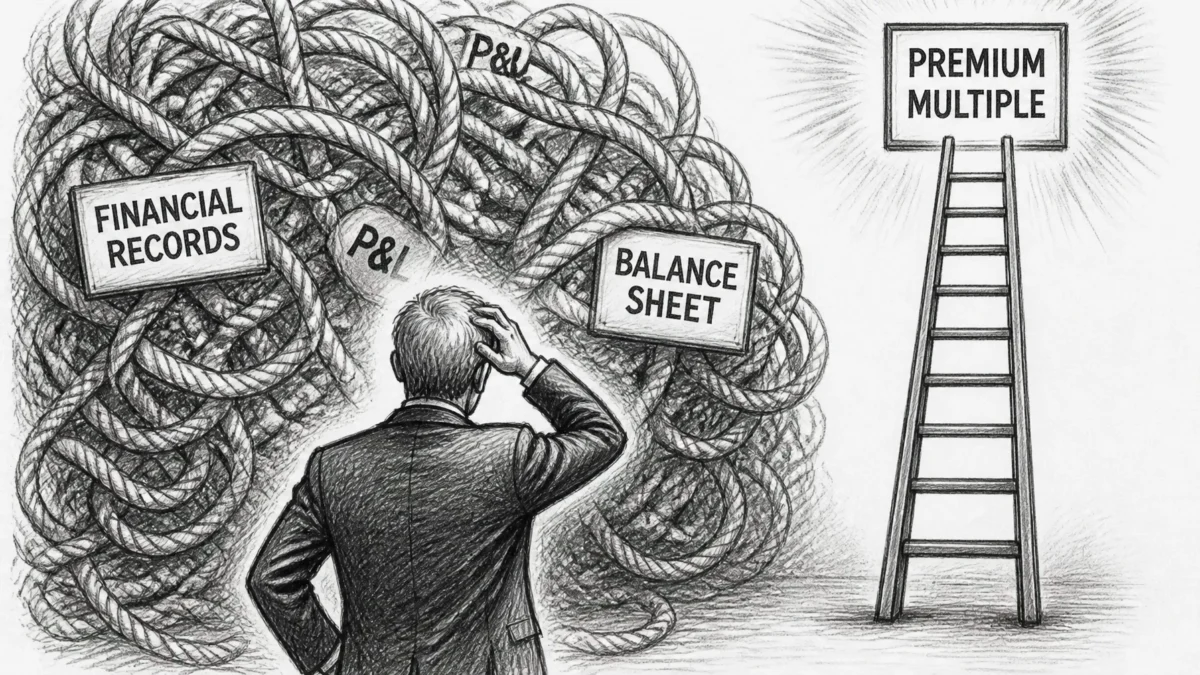
- Clean Up the Books. Stop running your personal life through the business account. It makes the math "muddy," and muddy math looks like hidden risk.
- Fire Yourself. Systematically hand off your responsibilities until your primary job is just looking at the scoreboard.
A business that runs without you is a product. A business that runs because of you is a burden.

The Reality Check Checklist
Be honest. No one is looking over your shoulder.
- Do you have a written succession plan? (No)
- Could you sell the business today and walk away forever? (No)
- Is your profit margin higher than the industry average? (Maybe)
- Does your staff make major decisions without calling you? (Rarely)
If you checked "No" or "Rarely," your business value is currently trending toward the lower end of the spectrum.
That isn't an insult. It's a diagnostic.
Now you know where the work is. You can continue to be offended by the market, or you can start building something the market actually wants to buy.
The choice is yours, but the clock is ticking. Don't wait until you're forced to sell a "discounted" version of your life's work. Exit planning is not something you do when you're done; it's something you do so you can be done.
Your Move
Stop guessing what your business is worth.
Get a professional valuation. Face the number. If it’s lower than you thought, good. Now you have a roadmap.
If you want to understand the mechanics of building a business that actually sells, start by reading "Before the Clock Decides." It’s the reality check every founder needs before they hit the wall.
Build the asset. Kill the ego. Watch the value rise.