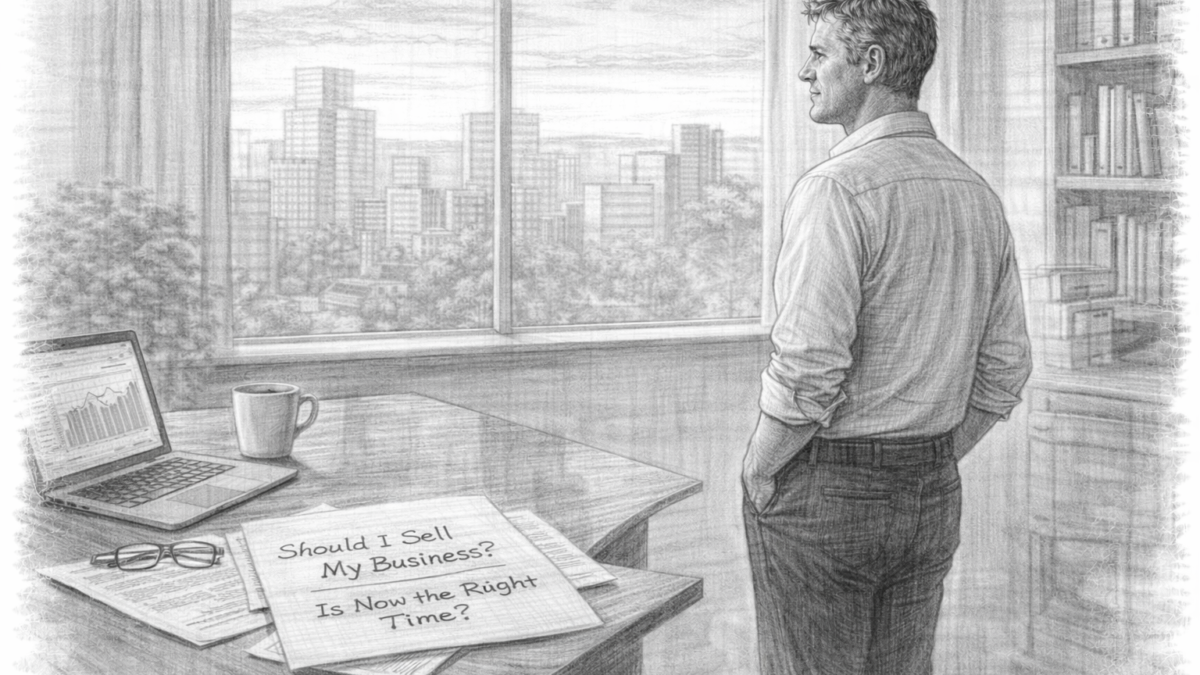
Most business owners know they will eventually leave their company.
Very few plan for it.
It’s not because they’re careless or irresponsible. It’s because the idea of leaving a business you built from the ground up is complicated.
There’s always another year to grow.
Another opportunity to improve.
Another reason to wait.
So exit planning quietly moves down the priority list.
Until one day it becomes urgent.
The Illusion of Unlimited Time
Entrepreneurs often assume they have more time than they do.
The business is running.
Revenue is steady.
The future looks open.
It’s easy to believe that planning for an exit can happen later.
But the window for a strong exit is rarely permanent.
Markets shift.
Energy levels change.
Industries evolve.
Key employees leave.
What looks stable today can look very different five years from now.
Exit planning is less about predicting the future and more about protecting flexibility before circumstances change.
The Hidden Risk of Waiting
The biggest danger in delaying exit planning is not financial.
It’s loss of control.
Owners who plan early can choose:
-
When to explore selling
-
How to structure the transition
-
Which buyers or successors make sense
-
What timeline fits their personal goals
Owners who wait often find themselves reacting instead of choosing.
Suddenly decisions are influenced by health issues, burnout, market conditions, or unexpected disruptions.
Preparation keeps the owner in control of the timing.
Exit Planning Isn’t About Leaving Tomorrow
Many owners assume exit planning means preparing to sell immediately.
That’s rarely the case.
Good exit planning often begins years before a sale.
The process usually focuses on strengthening the business in ways that benefit the owner today:
-
Building leadership depth
-
Reducing owner dependence
-
Improving financial clarity
-
Strengthening operational systems
Ironically, companies that prepare for an eventual exit often become more enjoyable to own.
Because the business begins to function independently of the owner’s constant involvement.
If you want to understand how exit planning connects to the selling process, you can review the framework here:
https://visionfox.com/business-brokerage/
Planning does not force a sale.
It simply creates options.
The Emotional Side of Exit Planning
There’s another reason owners delay the conversation.
Identity.
For many entrepreneurs, the business becomes a major part of who they are.
The company represents years of decisions, relationships, and personal investment.
Thinking about an exit can feel like thinking about losing something important.
But exit planning isn’t about losing the business.
It’s about protecting the value of what you built.
A Better Way to Think About Exit Planning
Instead of asking:
“Should I sell my business?”
Try asking a different question:
“If I wanted the option to exit in five years, what would need to improve today?”
That question changes everything.
Now you’re not thinking about leaving.
You’re thinking about strengthening the business.
You begin improving systems, building leadership, and increasing transferability.
Those improvements benefit the company whether you sell or keep it.
Exit Planning Creates Freedom
Owners who plan early often discover something unexpected.
They feel less pressure.
Because once the business becomes stronger and more independent, the future opens up.
You can keep running the company.
You can step back gradually.
You can sell when conditions are right.
Exit planning isn’t about ending the story.
It’s about making sure you decide when the next chapter begins.
Published by the Vision Fox Advisory Team — helping business owners gain clarity about growth, value, and exit decisions before the clock decides.