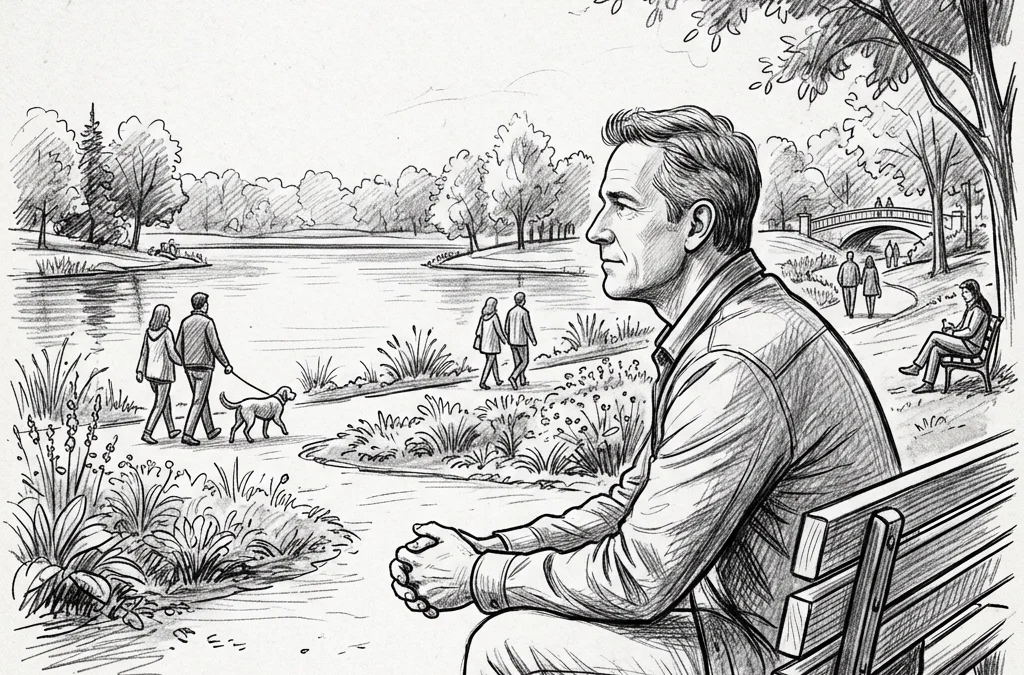
The wire hit your account.
The legal fees are paid. The keys are handed over. The champagne has gone flat.
You spent years: maybe decades: dreaming of this exact moment. You thought the money would bring freedom. You thought the lack of "firefighting" would bring peace.
But now, it’s Tuesday morning at 10:00 AM.
Your phone isn't ringing. Your inbox is empty for the first time in twenty years. And you are staring at a wall, wondering why you feel like you’ve just lost a limb instead of winning a race.
The hardest part of exiting a business isn't the valuation. It’s the identity crisis that follows.
The Identity Trap: You Are Not Your LLC
For most owners, the business isn’t just a place they work. It’s a suit of armor they wear every single day.
When you walk into a room as "The Owner" or "The CEO," you have an automatic identity. You have status. You have gravity. People listen when you speak. Your schedule is dictated by the needs of the machine you built.
But when you sell, you take that armor off.
Suddenly, you’re just a guy in a coffee shop. You’re no longer the person who signs the paychecks. You’re just another person in line.
The truth is: Most business owners don't have a life; they have a company that allows them to pretend they have a life.

When that company is gone, the "You" that remains is often a stranger.
The Psychological Severance
Research shows that the "I'm not ready yet" trap isn't usually about the money. It’s about the fear of the void.
One executive described the shock of his first day post-exit: He tried to log into his email to check on a project, only to realize his credentials had been deactivated at midnight. His computer was a paperweight. His digital existence was erased.
That sudden severance is a trauma.
- You lose your purpose.
- You lose your daily structure.
- You lose your social circle (most of which was tied to the industry).
- You lose your "Expert" status.
If you haven't built a version of yourself that exists outside the office walls, the exit won't feel like a victory. It will feel like a funeral.
The Empty Chair Syndrome
We talk a lot about succession planning and making sure the business can run without you.
We ask: What breaks if you disappear?
Usually, we're talking about the operations. We're talking about sales, workflows, and culture.
But there’s a second question you need to ask: What breaks in you when the business disappears?

If your only source of dopamine is closing a deal or solving a crisis, retirement will be a slow-motion disaster. You will find yourself "consulting" for people who don't want your help, or worse, micromanaging your spouse’s grocery list because you need something to control.
The Lie of the "Permanent Vacation"
The market sells us a lie that the "Exit" is the finish line.
It tells us that once you hit your number, you’ll spend the rest of your days on a golf course or a boat, and you’ll be blissfully happy.
That is a delusion.
Human beings are wired for struggle and contribution. If you are a high-achiever: which you are, or you wouldn't have a business to sell: you cannot simply turn that engine off.
If you try to go from 100mph to 0mph, you’re going to go through the windshield.
You don't need a vacation. You need a new mission.
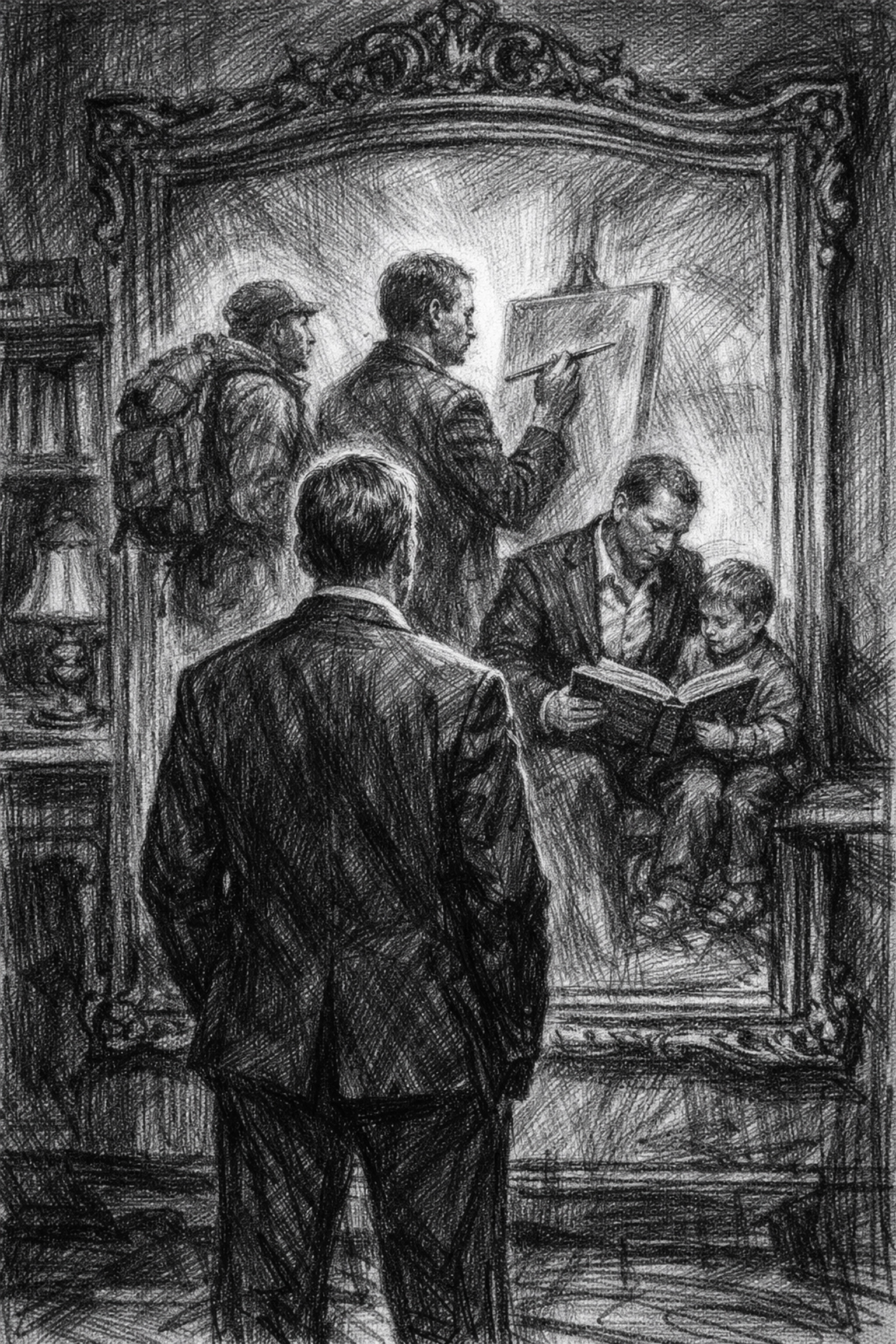
Rebuilding Your "Multiple Selves"
Successful exits happen when the owner recognizes that they are more than a single-dimensional character.
Before you sell, you have to start excavating the other versions of yourself that you buried to make the business a success.
- The Creative Self: What did you used to do before you were "too busy"?
- The Physical Self: Is your body a wreck because you prioritized the P&L over your health?
- The Intellectual Self: What do you want to learn that has absolutely nothing to do with your industry?
- The Philanthropic Self: Who can you help now that you have the resources but no longer have the title?
If you want to survive the exit, you need to start being these people now.
Don't wait until the closing date to find a hobby. If you don't have a life worth living on the Friday before you sell, you won't have one on the Monday after.
The Cost of Waiting
The longer you stay "The Boss" because you're afraid of being "No One," the more you devalue your company.
Why? Because you become the bottleneck.
A business that can't function without the "Big Boss" is a business that isn't worth as much to a buyer. Your ego is literally costing you money.
By refusing to step back and find out who you are outside the business, you are making the business harder to sell.
Your inability to plan for your personal future is a direct threat to your financial legacy.

If the clock decides for you: due to health, burnout, or market shifts: you won't have the luxury of an "identity transition." You’ll just be out. And that’s when the depression hits hardest.
Facing the Mirror
Ask yourself these diagnostic questions. Be honest. There’s no one else in the room.
- If I couldn't mention my job title for an entire dinner party, would I have anything to talk about?
- Do my friends like me, or do they like what I can do for them?
- When was the last time I felt a sense of accomplishment that wasn't tied to a financial metric?
- Am I staying in the business because it needs me, or because I’m terrified I’m useless without it?
If these questions make you uncomfortable, good. That discomfort is the first step toward a successful transition.
The New Definition of Success
Success after the exit isn't measured by your bank balance. It’s measured by your relevance.
But relevance doesn't have to come from a boardroom. It can come from mentoring, from writing, from building something new, or from being a present parent or grandparent.
You spent the first half of your life building a resume. The second half is about building a legacy.
But you can’t build a legacy if you’re still clutching the steering wheel of a car you’ve already sold.
At Before the Clock Decides, we help owners navigate this specific tension. It’s not just about the spreadsheets. It’s about the human being sitting behind the desk.
If you want to read more about the hard truths of this process, check out the book list or look into the core philosophy in Before the Clock Decides.
Your Move
Don't wait for the closing date to figure out who you are.
1. Audit your time. Block out four hours this week where you are not allowed to do anything related to your business. See what happens. See who shows up in that space.
2. Identify one "Non-Business" goal. Whether it’s a fitness milestone, a language, or a community project, give your high-achiever brain a new target that doesn't involve a revenue goal.
3. Talk to someone who has done it. Reach out to a former owner who sold three years ago. Don't ask them about the deal. Ask them what they did on their 100th day of retirement. Listen to the tone of their voice.
The clock is ticking. You can decide who you want to be, or you can let the exit decide for you.
Choose wisely.
Want to prepare your business: and yourself: for what’s next? Work with Mike and get a plan in place before the clock decides for you.