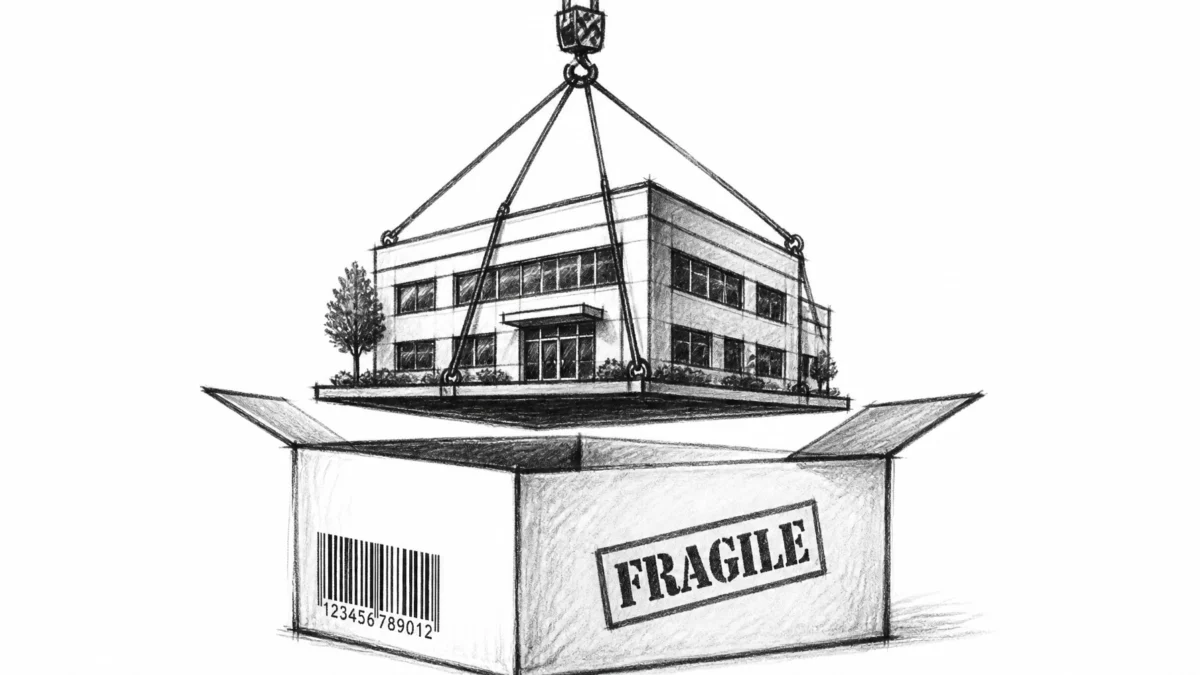
You didn’t build a business. You built a baby.
That is your first mistake.
For years, you have nurtured it, protected it, and stayed up late worrying about it. You see your company as a collection of memories, hard-won victories, and personal sacrifices.
The market does not care about your memories.
When the day comes to exit, and that day is coming for every owner, you will realize a cold, hard truth:
Buyers do not buy babies. They buy products.
If you want to exit on your terms, you must stop being an operator and start being a manufacturer. You are not just running a company; you are building a product that must eventually be sold to a customer called a Buyer.
And like any high-value product, it needs to be packaged.
The Myth of the "Protectable" Business
Most owners spend their entire careers protecting their business from the outside world. They keep the "secret sauce" in their heads. They handle the key relationships personally. They are the primary engine of every major decision.
They think this makes the business safe.
It actually makes the business worthless.
If the business requires your constant protection, it is fragile. If it is fragile, it is not a product, it’s a job. And nobody wants to pay you seven or eight figures just to buy themselves a 60-hour-a-week job.
What breaks if you disappear for thirty days?
If the answer is "everything," then you don't have a product to sell. You have a hostage situation.
Your Business is the Box, Not the Content
Imagine buying a new smartphone. You expect a sleek box, a clear instruction manual, and a device that works the moment you press the button.
Now imagine buying that same phone, but the seller tells you: "I have to come over every morning to help you turn it on. Also, the charging cable only works if I’m the one plugging it in."
You would walk away.
Yet, this is exactly how most business owners try to sell their companies.
Packaging is the process of making the business "turn-key."
It is the shift from "I do this" to "This happens."

The Components of the "Business Product"
To package your business for a sale, you must view it through the lens of a buyer. A buyer is looking for three things: Predictability, Transferability, and Scale.
If your business lacks these, your "packaging" is torn.
1. The Instruction Manual (SOPs)
A product without a manual is a puzzle. Buyers hate puzzles.
Your processes cannot live in the minds of your employees. They must live in a document.
- What it isn't: A 400-page binder that no one reads.
- What it is: A clear, repeatable system that allows a new person to produce the same result you do.
2. The Battery (The Management Team)
In a real product, the power source is internal.
In a bad business, the owner is the battery. When the owner leaves, the lights go out.
A high-value business has a management team that makes decisions without asking for permission.
3. The Label (Clean Financials)
If a buyer can't read your "ingredients," they won't consume the product.
Many owners run personal expenses through the business to "save on taxes."
Every dollar you "save" in taxes by hiding profit might cost you five to ten dollars in sale price.
Clean, professional, and transparent financials are the label that proves the product is healthy.
The Emotional Weight vs. The Economic Reality
This is where most owners fail. They cannot separate their identity from the entity.
They feel that because they worked eighteen-hour days for a decade, the business is "worth" a certain amount.
Market value is not a reward for your effort.
Market value is a calculation of future risk-adjusted cash flow.

If you wait until you are "burnt out" to start packaging the business, you have already lost. Burnout leads to desperation. Desperation leads to bad packaging. Bad packaging leads to a "fire sale" price.
As I discuss in my book, Before the Clock Decides, timing is the one variable you cannot recover once it’s gone. You must package the business while it is growing, not when you are dying to leave.
Why Packaging Starts Now (Not Next Year)
You might think you are five years away from an exit.
You are wrong.
An exit can be forced upon you by health, market shifts, or a "Godfather offer" you didn't see coming. If a buyer knocked on your door today with a check, could you hand them the "box" and walk away?
If the answer is no, you are leaving money on the table every single day.
Effective packaging takes time. It takes:
- Standardizing your sales process so it doesn't rely on your "charisma."
- Diversifying your customer base so no single client can kill the company.
- Auditing your books so there are no "skeletons" in the closet during due diligence.
This is the work of Vision Fox Business Advisors. We don't just "list" businesses; we help owners understand what their product is actually worth and how to fix the "packaging" before the clock runs out.

The Hidden Cost of the "Baby" Mindset
When you treat the business like a baby, you make emotional decisions.
- You keep underperforming employees because they are "like family."
- You avoid new technology because "this is how we've always done it."
- You refuse to document processes because "no one can do it like I can."
These are all signs of a business that is being "protected" into obsolescence.
A product mindset is clinical.
It asks: What does this business need to be more valuable to the next owner?
Sometimes that means making hard choices today to ensure a better outcome tomorrow. It means recognizing that you are the temporary steward of an asset, not the permanent soul of a machine.
The Clock is Ticking
The most dangerous phrase in business is: "I'll worry about that when I'm ready to sell."
By the time you are "ready," the market may not be. Or the business may have plateaued. Or your health may have made the decision for you.
Preparation is not a sign of weakness. It is a sign of professional maturity.
You are either building an asset to be sold or a cage to be trapped in.

Your Move
Stop protecting. Start packaging.
The transition from operator to seller doesn't happen at the closing table. It happens in your head, years before.
If you want to know what your "product" looks like to a buyer right now, you need an objective perspective. You need to see the flaws in the packaging before a buyer uses them to beat you down on price.
1. Audit your time. If 80% of your day is spent on "fires" that only you can put out, your packaging is non-existent.
2. Document one core process this week. Not next month. This week.
3. Get a valuation. You cannot package a product if you don't know its current market weight.
Don't wait for the clock to decide your future.
Take control of the package.
Want to dive deeper into the mindset of a successful exit? Pick up a copy of Before the Clock Decides or contact Vision Fox Business Advisors to start your preparation today.
{“@type”:”BlogPosting”,”image”:”https://cdn.marblism.com/5aDdE7qjCOF.webp”,”author”:{“url”:”https://beforetheclockdecides.com/mike-steward-2″,”name”:”Mike Steward”,”@type”:”Person”},”@context”:”https://schema.org”,”headline”:”Your Business is a Product: Why Packaging for Sale Should Start Now”,”publisher”:{“logo”:{“url”:”https://beforetheclockdecides.com/”,”@type”:”ImageObject”},”name”:”Before the Clock Decides”,”@type”:”Organization”},”articleBody”:”Most owners treat their business like a child, but buyers treat it like a product. To maximize value, you must package your business for sale by creating systems, clean financials, and a management team that functions without you. This blog explores the mindset shift required to prepare for an intentional business exit.”,”description”:”Learn why shifting your mindset from business operator to product manufacturer is essential for a successful exit. Discover the core components of packaging your business for sale.”,”datePublished”:”2026-07-18″}