Most owners think their business is worth what it earns.
That is only half true.
A buyer does not pay for yesterday’s earnings. A buyer pays for the earnings they believe will continue tomorrow.
So here is the harder question:
If you died tonight, how much of your business would still produce cash on Monday morning?
Not eventually.
Not after your family finds the passwords.
Tomorrow.
The Story You Tell Yourself vs. the Reality Buyers See
You may believe your business is valuable because:
- You have been operating for 20 years.
- Revenue has grown steadily.
- Customers trust you.
- Employees rely on you.
- You own expensive equipment.
- You have sacrificed almost everything to build it.
All of that may be true.
It still does not answer the valuation question.
A buyer, successor, lender, or family member will ask something more direct:
Can this business function, retain customers, collect money, and make decisions without the owner?
If the answer is no, the business is not as transferable as you think.
And if it is not transferable, its value falls.
This is not an insult.
It is how markets work.
A business dependent on one person is not fully a business. It is a job, a network of relationships, and a collection of decisions tied to that person.
Buyers do not pay premium prices for a job they have to rebuild.
What Happens the Morning After?
Imagine the call comes.
You are gone.
Your spouse, partner, or children now have to deal with the company.
What happens first?
- Who knows the bank accounts?
- Who can approve payroll?
- Who has access to customer contracts?
- Who knows which vendors must be paid?
- Who understands the pricing?
- Who can make decisions without you?
- Who knows which customers are likely to leave?
- Who can explain the financial statements?
If the answers are unclear, the business does not suddenly become worthless.
But its going-concern value can deteriorate quickly.
The company may still own equipment, inventory, real estate, intellectual property, or cash.
That is asset value.
But the value of a business is often greater than the value of its parts because those parts work together to produce future earnings.
If the earnings stop, the premium disappears.

The Three Tests of Transferable Value
Your business does not need to be owner-free.
That is not realistic.
But it must be owner-optional enough that another capable person can operate it.
Use these three tests.
1. The Customer Test
If your top customers deal mainly with you, the relationships may not belong to the company.
They may belong to you.
Ask yourself:
- Would customers stay if you disappeared?
- Do they know your team, or only your name?
- Does someone else regularly attend important meetings?
- Are customer records complete and accessible?
- Can another person explain the history and expectations of each major account?
If every important customer says, “I only want to deal with the owner,” you have a concentration risk.
The revenue may look strong.
The transferability is weak.
2. The Decision Test
What decisions stop when you are unavailable?
Pricing?
Hiring?
Purchasing?
Collections?
Production?
Approvals?
Customer disputes?
The question is not whether you make the best decisions.
The question is whether anyone else has the authority and information to make good enough decisions without waiting for you.
A business that requires the owner’s permission for everything moves at the speed of one person.
That is not scalability.
That is a bottleneck.
3. The Knowledge Test
What critical knowledge exists only in your head?
Maybe you know:
- Which suppliers will extend terms.
- Which customer always pays late.
- Which employee can solve a production problem.
- How to price unusual work.
- Which contract terms create danger.
- What to do when a key machine fails.
If the answer to those questions lives only in your memory, you have not built an asset.
You have built personal dependence.
Undocumented knowledge is fragile value.
The Math of Owner Dependence
There is no universal discount that applies to every owner-dependent business.
A formal valuation depends on the company, industry, financial history, market conditions, risk, and buyer.
But the basic math is easy to understand.
Suppose your business produces $500,000 in annual earnings.
At a 4× earnings multiple, that suggests a value of:
$500,000 × 4 = $2 million
Now suppose a buyer believes the business is riskier because:
- Customers depend on you.
- No manager can replace you.
- Financial reporting is weak.
- Key processes are undocumented.
- Your death or absence could disrupt revenue.
The buyer may apply a 3× multiple instead:
$500,000 × 3 = $1.5 million
Same earnings.
Different confidence.
A $500,000 reduction in value can come from perceived risk, not a decline in revenue.
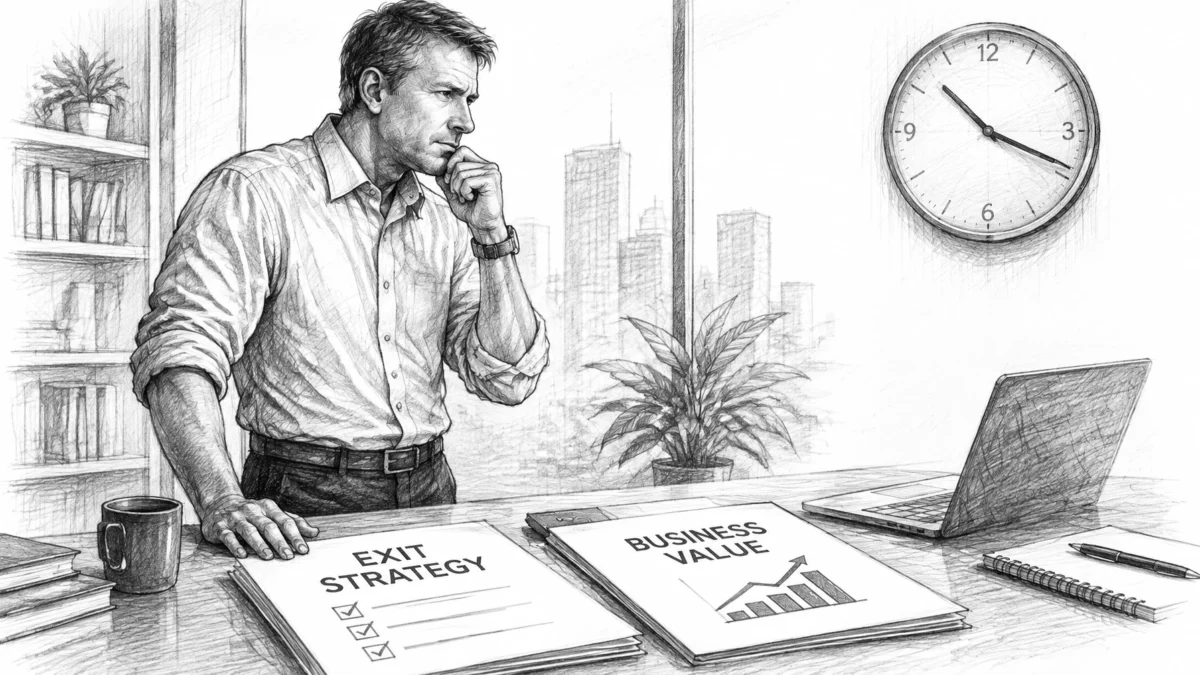
That is why understanding value early matters. A current valuation is not merely a sale document. It is a diagnostic tool.
J.P. Morgan notes that business value can be affected by financial performance, market position, assets, liabilities, growth potential, and the ability of management and employees to continue without the owner. Their overview of business succession planning and valuation makes the point clearly: owners should understand value before a succession event forces the issue.
What Buyers Actually Want
Buyers want evidence.
Not promises.
Not stories about what the business could become.
Evidence that the business can keep producing results after the owner leaves.
That evidence usually includes:
-
Clean financial records
Revenue, expenses, profit, cash flow, debt, and owner adjustments are understandable. -
Repeatable revenue
Customers return because of the company’s value, not only because of the owner’s personal relationships. -
Operational depth
Someone besides the owner can manage daily work and solve problems. -
Documented systems
Important work can be taught, measured, and repeated. -
A credible leadership bench
Employees and customers know who is responsible when the owner is unavailable. -
A continuity plan
The company has a written response for death, disability, illness, or sudden absence.
A business does not become transferable because you say it is.
It becomes transferable when the records, people, systems, and results prove it.

The Owner Who Stopped Being the Bottleneck
I once worked with an owner who believed the company could not function without him.
He handled sales.
He approved spending.
He managed the key accounts.
He solved employee problems.
He made every major operating decision.
He was proud of being needed.
He was also trapped.
The first move was not selling the business.
It was identifying everything that depended on him.
Then the team documented the work, transferred customer relationships, clarified decision rights, and gave a manager real authority.
The owner did not vanish overnight.
He stepped back in stages.
Over time, the company became less dependent on his presence and more dependent on its systems.
He moved from doer to builder.
That changed more than his stress level.
It improved the company’s future options.
If the owner had died before making those changes, the business would have faced confusion, customer risk, and a much weaker negotiating position.
The work was not just about preparing for a sale.
It was about protecting value from an event nobody wants to discuss.
What to Do Before You Need the Plan
You do not need to list the business tomorrow.
You do need to stop pretending that tomorrow will organize itself.
Start with these five moves.
1. Write the 30-Day Absence Plan
Assume you are unavailable for 30 days.
Document:
- Who runs operations.
- Who handles payroll.
- Who contacts customers.
- Who can access financial accounts.
- Who approves expenses.
- Who speaks with lenders, vendors, and employees.
If one person cannot answer these questions, start there.
2. Name the Single Points of Failure
Make a list of everything that stops if you stop.
Then rank each item:
- Critical
- Important
- Replaceable
Fix the critical items first.
Do not spend six months redesigning a minor process while customer relationships remain trapped in your phone.
3. Transfer One Relationship at a Time
Bring a team member into every important customer and vendor relationship.
Let that person lead part of the conversation.
Then more of it.
The goal is simple:
Customers should trust the company, not just the owner.
4. Build a Real Management Layer
A title is not leadership.
A manager who still needs your approval for every decision is not running the business.
Give people responsibility, authority, and measurable expectations.
Then let them operate.
5. Know Your Number Before There Is a Crisis
Read What Your Business Is Really Worth, and Why Most Owners Get It Wrong.
Then review The Owner-Optional Business.
A valuation is not a promise.
It is not a guarantee.
It is a snapshot of what the market may believe today.
That snapshot gives you time to improve what is weak.
This Is Also About Your Family
If most of your wealth is tied to the company, your business is not only an operating asset.
It is part of your family’s financial future.
If you die without a continuity plan, your family may inherit an ownership interest without inheriting the knowledge required to protect it.
That creates pressure immediately.
They may need to sell quickly.
A rushed sale produces fewer options.
Fewer options usually produce weaker terms.
This is why your plan should involve qualified legal, tax, insurance, and financial professionals. A buy-sell agreement, key-person insurance, estate plan, or succession structure may be appropriate depending on your circumstances.
Do not treat those tools as substitutes for a transferable business.
They are protection around the business.
They do not fix a company that cannot operate without you.
The Hard Truth
You may believe you are building a valuable business.
But if everything depends on your presence, you may be building a valuable position inside the business.
Those are not the same thing.
The market will value what survives you.
Not your effort.
Not your years.
Not your intentions.
What survives you?
The customers.
The cash flow.
The systems.
The leadership.
The trust.
That is the value you are actually building.
Your Move
Ask one person on your team this question:
“If I died tonight, what would break tomorrow?”
Do not defend the business when they answer.
Listen.
Write down every weakness.
Then choose the first one to fix.
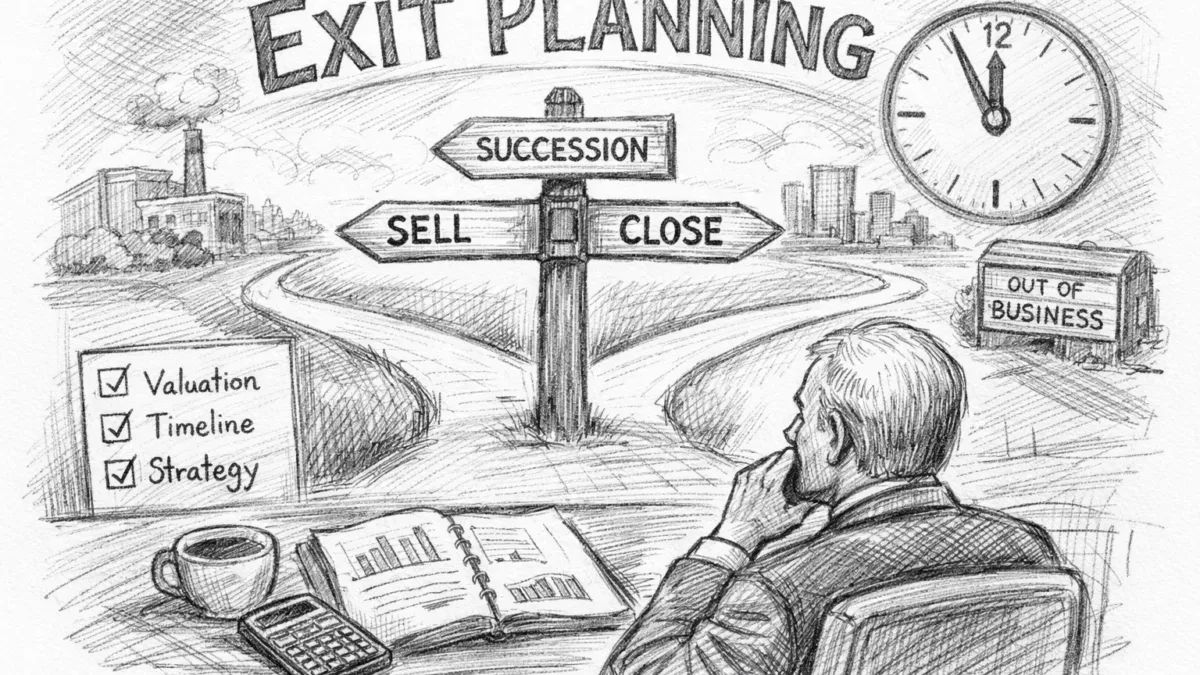
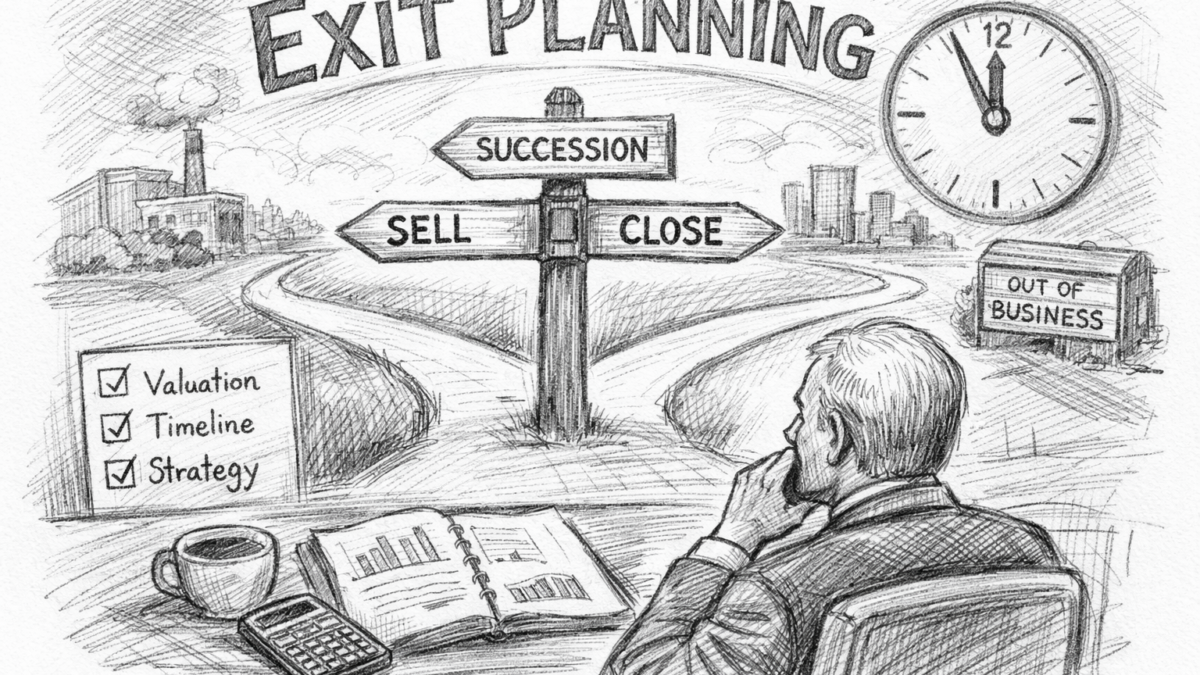
For more guidance on building a transferable company and choosing your exit before circumstances choose it for you, explore Before the Clock Decides by Mike Steward.
If you want help understanding your current value and future options, learn more about working with Mike and the advisors at Vision Fox Business Advisors.
The clock is already moving.
Your job is to make sure your business can keep moving without you.