
Selling a family business is not one transaction.
It is two.
The first transaction is financial: ownership, price, taxes, terms, and risk.
The second transaction is emotional: identity, control, expectations, fairness, and family history.
Most owners prepare for the first one.
They ignore the second.
That is where the deal often breaks.
Family dynamics destroy more business sales than weak financials do.
Not because families are incapable of making rational decisions.
Because family members rarely enter the conversation with the same definition of “fair,” “ready,” or “the future.”
The Family Business Sale Is More Than a Price
Selling a family business is not simply deciding what the company is worth.
It is deciding what the business means after ownership changes.
That distinction matters.
A buyer may see:
- Revenue
- Profit
- Customers
- Employees
- Equipment
- Contracts
- Growth potential
Your family may see:
- Your name on the building
- A parent’s sacrifice
- A child’s career
- A grandparent’s legacy
- A source of family security
- A promise that was never written down
Those are not the same thing.
A buyer is purchasing a business.
Your family may believe it is protecting a piece of its identity.
If you do not address both realities, the financial process will carry emotional weight it was never designed to hold.
What You Think Is Happening Versus What Is Actually Happening
You may think the family is waiting for the right time to discuss succession.
The reality is that everyone may be waiting for someone else to start.
You may think your children understand the plan.
They may only understand what they hope the plan is.
You may think one child will take over.
That child may not want the responsibility, may not be prepared for it, or may assume ownership will be divided equally among the siblings.
You may think a sale to an outside buyer would be viewed as a betrayal.
Another family member may see it as the only responsible way to protect everyone financially.
Silence does not preserve harmony. It creates competing stories.
And competing stories eventually collide.
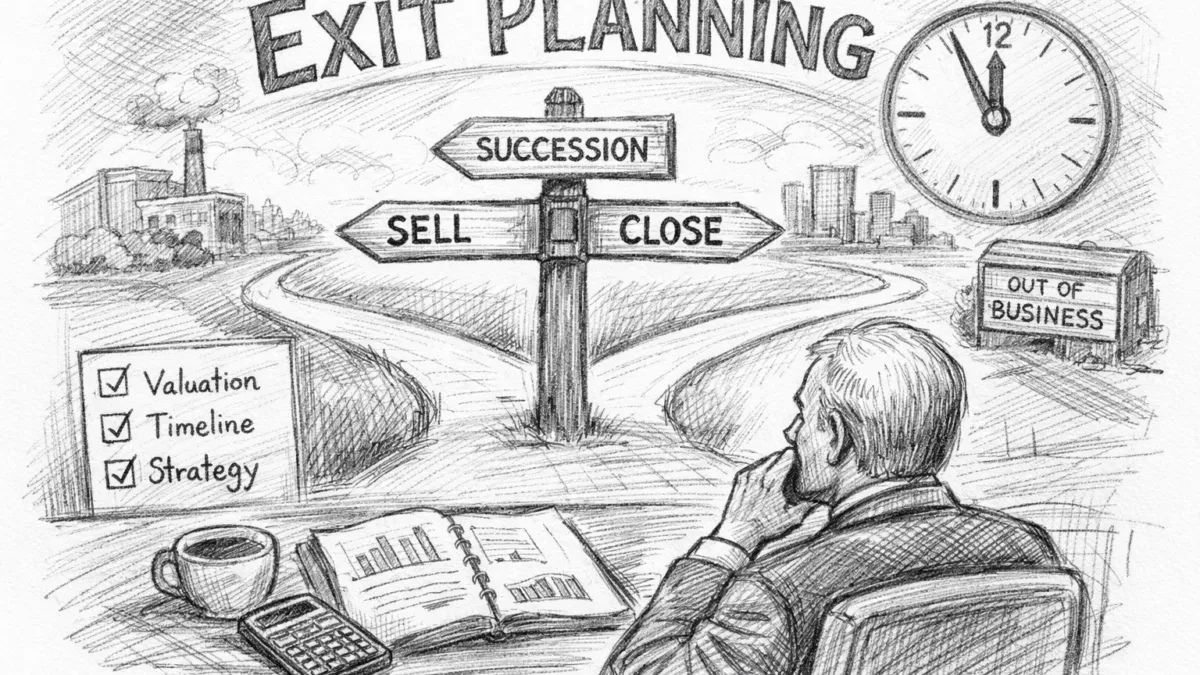
The Cost of Avoiding Succession and Ownership Conversations
Avoiding the conversation feels comfortable today.
It becomes expensive later.
If the family does not agree on who should own the business, then the eventual transaction becomes a referendum on every old disagreement.
If the family does not agree on who should lead, then leadership becomes a contest.
If the family does not agree on how non-operating heirs should be treated, then fairness becomes a weapon.
The cost can show up in several ways:
-
A delayed sale
One family member refuses to approve the transaction.
-
A discounted price
The owner accepts poor terms because the family waited until a health issue, burnout, or crisis forced action.
-
A failed internal succession
The next generation receives ownership without the skills, capital, or authority to operate the company.
-
Employee instability
Key employees sense conflict and begin looking for safer ground.
-
Permanent family damage
The deal closes, but the relationships do not recover.
Here is the simple math.
If preparation could improve value by 20 percent, and the company is worth $5 million today, that is a potential $1 million difference.
If family conflict delays the sale until earnings fall by 20 percent, the same company may now support a far lower price.
The numbers compound.
A family disagreement is not separate from business value. It can become the reason business value falls.
Ownership Is Not the Same as Employment
This is one of the most important conversations a family can have.
A family member may work in the company without being entitled to ownership.
Another may own part of the company without working in it.
A third may expect to lead because of birth order, not ability.
Those roles must be separated.
Ownership answers: Who receives the economic benefit?
Leadership answers: Who makes decisions?
Employment answers: Who has a job, and under what standards?
Legacy answers: What should remain true after the founder leaves?
These questions overlap.
They are not identical.
A clean succession plan states the difference in plain language.
It does not hide behind family titles or assumptions.
Start With the Conversation, Not the Deal Structure
Do not begin with, “Should we sell to a third party or transfer it to the children?”
That is too late in the process.
Start with the questions underneath the transaction:
- Does the next generation actually want to own the business?
- Does anyone want to operate it?
- Who is qualified to lead?
- What does the current owner need financially?
- What does “fair” mean to each family member?
- What happens to children who do not work in the business?
- What happens if the intended successor changes their mind?
- What happens if the business needs capital the family cannot provide?
- Would selling the company protect the family better than keeping it?
Ask these questions before anyone is emotionally or financially committed to one answer.
A family meeting is not a vote.
It is a fact-finding process.
The goal is not to force agreement in one afternoon.
The goal is to surface assumptions while there is still time to address them.
For difficult families, use an independent facilitator or advisor.
That is not a sign of weakness.
It is a sign that you understand the stakes.
Resources from organizations such as the Business Development Bank of Canada and Family Business UK emphasize the same basic principle: succession planning must address both business realities and family relationships.
A Clean Process Has Rules
A clean process is not cold.
It is protective.
It gives people a way to make decisions without relying on pressure, guilt, or the loudest voice in the room.
A strong process usually includes five moves.
1. Define the owner’s financial needs
The current owner’s financial security comes first.
That does not mean the owner gets everything they want.
It means the family does not build a transition plan that leaves the person who built the company unable to support the next chapter.
Determine:
- Required retirement income
- Debt obligations
- Tax exposure
- Desired timing
- Ongoing involvement
- Personal risk tolerance
If the owner needs $200,000 a year after exiting, then a vague promise of “we will make it work” is not a plan.
It is a liability.
2. Establish a realistic value
Do not negotiate family ownership from a number someone heard at a dinner table.
Get an objective valuation.
The number is not a verdict.
It is a starting point for decisions.
A valuation can show:
- What buyers may trust
- Where the business depends too heavily on the owner
- Which risks reduce value
- What improvements could increase the price
- Whether an internal buyer can realistically afford the transfer
Mike Steward’s work through Vision Fox Business Advisors focuses on giving owners a grounded understanding of business value before a sale becomes urgent.
That timing matters.
You cannot negotiate intelligently about an asset whose value you do not understand.

3. Separate family roles from business roles
Put expectations in writing.
Who works in the business?
Who reports to whom?
How are leaders selected?
What performance standards apply?
Can a family member be removed?
Can an inactive owner sell their shares?
What decisions require family approval?
These rules are not insults.
They prevent future insults.
A family constitution, buy-sell agreement, or formal ownership policy can help establish the ground rules. The specific documents should be designed with qualified legal and tax professionals, but the family must first agree on the decisions those documents need to support.
4. Compare the real options
Do not assume keeping the business in the family is automatically the most honorable choice.
It may be the right choice.
It may also be the wrong one.
Compare:
- A sale to the next generation
- A gradual ownership transfer
- A management or employee buyout
- A partial sale to an outside partner
- A full third-party sale
- A sale followed by a family wealth and legacy plan
Sometimes the best way to protect the family business is to sell it.
Sometimes the best way to protect the family is to stop insisting that the business remain in the family.
That is a hard truth.
It is still the truth.
5. Communicate in stages
Do not announce a finished plan when the family has not been involved in forming it.
Use stages:
- Share the reason for planning.
- Gather each person’s perspective.
- Explain the company’s financial reality.
- Discuss ownership and leadership options.
- Test the practical feasibility.
- Involve professional advisors.
- Document the agreed process.
- Communicate the final decision to employees and stakeholders.
The sequence matters.
If you reverse it, resistance grows.
If you explain the decision only after the deal is nearly complete, family members may hear the process as a judgment against them.
From Bottleneck to Builder
I have seen owners become the central bottleneck in their own companies.
Every customer issue reaches them.
Every major decision waits for them.
Every family member measures their position against the owner’s approval.
That may work for years.
It does not create a transferable company.
The transformation begins when the owner stops asking, “How do I keep control?” and starts asking, “How do I build something that can operate without me?”
That means:
- Documenting decisions
- Training leaders
- Building independent customer relationships
- Sharing financial information
- Establishing management accountability
- Testing the business without constant owner intervention
The owner moves from bottleneck to builder.
That shift increases business value.
It also reduces family tension because the future no longer depends on one person’s mood, memory, or health.
Do Not Confuse a Family Sale With a Family Favor
A transfer to family should still be a real transaction.
That means addressing:
- Price
- Financing
- Payment terms
- Control
- Performance expectations
- Tax consequences
- Security for the seller
- Protection for non-operating family members
A discounted sale may feel generous.
It may also create resentment, tax problems, or financial dependence.
A full-price sale may feel harsh.
It may be the fairest way to treat every family member, especially when some are active in the business and others are not.
Love is not a substitute for structure.
If the next generation cannot afford the purchase, then identify that early.
If they cannot run the business, then identify that early.
If the owner cannot afford to finance the transition, then identify that early.
The sooner the truth appears, the more options remain.
The Goal Is Not to Keep Everyone Happy
That is impossible.
The goal is to create a process people can respect even when they dislike the outcome.
A clean sale may leave one family member disappointed.
A messy sale leaves everyone suspicious.
Those are different results.
The first can be managed.
The second spreads.
Selling your business does not erase your legacy.
A business is not the only way to pass values, wealth, or opportunity to the next generation.
Sometimes the legacy is the company itself.
Sometimes it is what the sale makes possible afterward.
Either way, the family needs to decide deliberately.
Do not let an unspoken expectation make the decision for you.
Your Move
Call a family meeting before you call a buyer.
Ask three questions:
- Who wants to own the business?
- Who wants to operate the business?
- What does fairness require if those people are different?
Then get a realistic valuation and compare every option without protecting anyone’s favorite story.
If you need help understanding value, succession choices, or the path toward a future sale, schedule a confidential conversation.
The first transaction is financial.
The second is emotional.
Plan both before the clock decides for you.