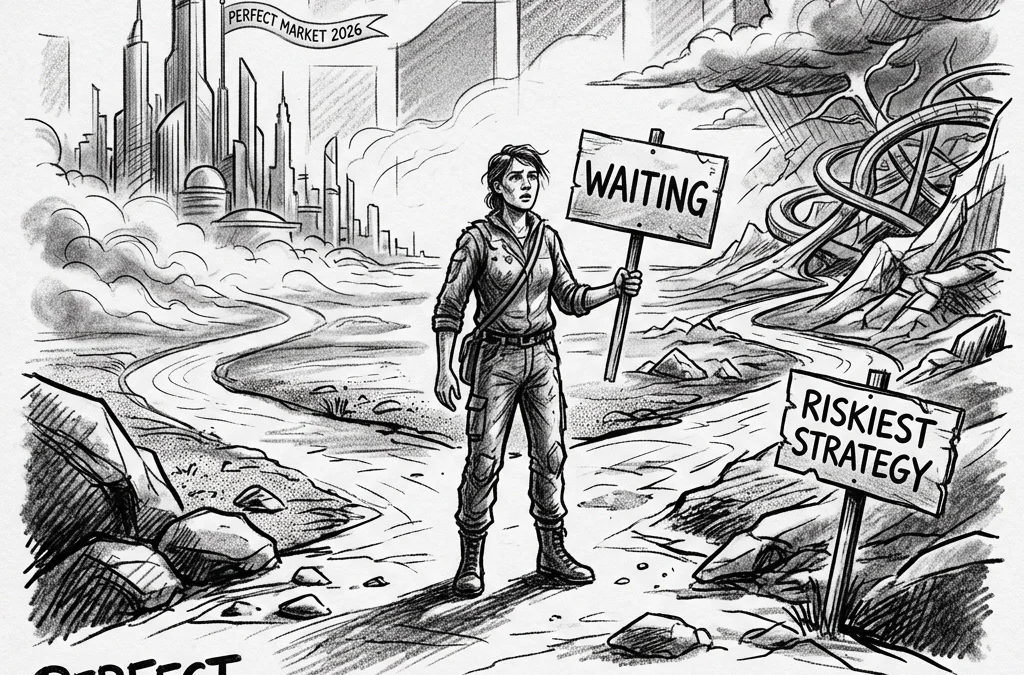
Most business owners are waiting for a ghost.
They call it the “Perfect Market.” They imagine a world where interest rates are at record lows, multiples are at record highs, and the political landscape is as calm as a Sunday morning.
It doesn’t exist. It never did.
As we sit here in April 2026, the world looks nothing like that. The global economy is fragmented. AI is moving so fast it’s making traditional business models obsolete overnight. Tariffs are shifting the cost of goods every other week.
If you are waiting for things to “settle down” before you plan your exit, you aren’t being patient.
You are being reckless.
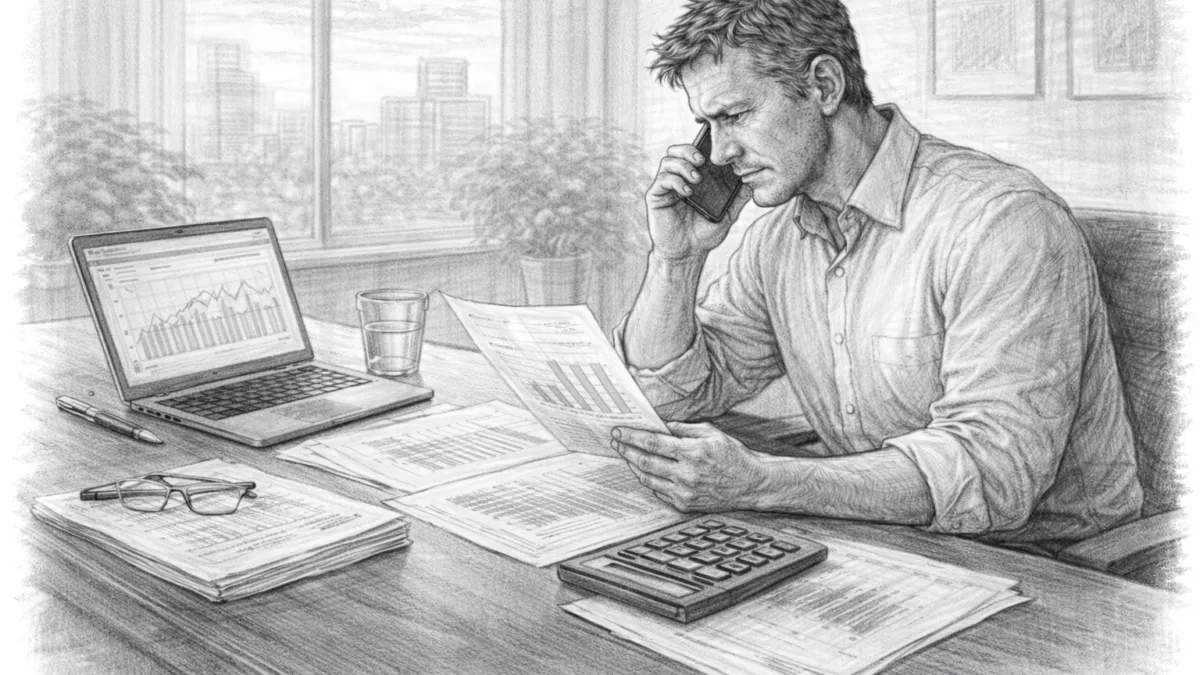
At Before the Clock Decides, I see this every day. Smart, capable founders who have built incredible companies, but they’re paralyzed by the headlines. They think they can time the market like a day trader.
They can’t. Neither can you.
The Myth of the Goldilocks Zone
The "Perfect Market" is a comforting delusion.
It’s the idea that there is a brief window: a Goldilocks Zone: where everything is "just right" for you to sell your business and walk away with maximum value.
Here is the truth: By the time you realize you’re in a "perfect" market, the window is already closing.
Market conditions are trailing indicators. By the time the news tells you it’s a seller’s market, the sophisticated buyers have already adjusted their prices. They’re already looking at the next set of risks.
In 2026, the speed of information is too high for you to beat the clock.

Waiting is not a strategy. It’s a gamble where you don’t know the odds.
When you wait for the "perfect" time, you are handing over control of your legacy to external forces you cannot influence. You are letting the Federal Reserve, global trade wars, and Silicon Valley disruptors decide what your life's work is worth.
Why 2026 is Different (and Why That’s Good)
The market in 2026 isn't broken; it's just honest.
We’ve moved past the era of cheap money and predictable growth. Today’s market is characterized by rapid divergence.
There is a widening gap between companies that are "exit-ready" and those that are just "surviving."
- AI Maturation: Buyers aren't just looking at your EBITDA anymore. They are looking at your tech stack. If your business is still run on spreadsheets and manual labor while your competitors are using AI to 10x their efficiency, your value is plummeting every day you wait.
- Policy Volatility: With tariff impacts continuing to roll through sectors like electronics and furnishings, the "cost of doing business" is a moving target.
- The Velocity of Competition: Product-market fit is being found faster than ever by new entrants. Your "moat" is narrower than you think.
If you’re looking for a valuation that makes you smile, you have to stop looking at the news and start looking at your internal operations.
What Are You Actually Waiting For?
Let’s get honest. When an owner says they are waiting for the market to improve, they are usually hiding one of three things:
- Fear: They don’t know who they are without the business.
- Disorder: The books are a mess, and they know a due diligence process would tear them apart.
- Hubris: They believe they can squeeze out "just one more" record year before they leave.
Greed and fear are the two fastest ways to destroy value.
Think about it this way: If your business is worth $10 million today, but you wait two years for a "better market" and a recession hits, or your health fails, or a competitor wipes out your top client: what then?
You didn't just lose the $10 million. You lost the two years of your life you spent chasing a ghost.
The Mathematical Reality of Waiting
Let’s look at the "if/then" logic of your exit.
Scenario A: You prepare now. You optimize your systems, clean up your valuation, and go to market when your business is at its peak performance, regardless of the macroeconomy.
- Result: You sell for a strong multiple because your business is a "Turnkey Asset" that buyers crave during uncertain times.
Scenario B: You wait for the "Perfect Market." You keep your head down and keep grinding.
- Result: You hit a burnout wall in 2027. The market has shifted. You are forced to sell under duress.
A business sold under pressure is a business sold at a discount.
Buyers smell desperation. If you are selling because you have to, you’ve already lost the negotiation. If you are selling because you are ready, you hold the cards.
Diagnostic Questions: Is Your Business Actually Saleable?
Instead of checking the S&P 500, check your own house. Ask yourself these questions today:
- What breaks if you disappear for 30 days? If the answer is "everything," your business isn't an asset. It's a job. Nobody wants to buy your job.
- Is your revenue concentrated? If 40% of your income comes from one client, you are one bad phone call away from bankruptcy.
- Can you prove your margins? Buyers don't trust "feelings." They trust audited, clean, and defensible data.
- Is your exit strategy intentional? Or are you just hoping someone will knock on your door with a bag of cash?
If you can't answer these questions with confidence, the "perfect market" won't save you.
Market Timing is for Amateurs. Readiness is for Pros.
I’ve spent years as a broker and a partner at Before the Clock Decides. I’ve seen owners walk away with generational wealth in "bad" markets because their businesses were bulletproof.
I’ve also seen owners lose everything in "great" markets because they weren’t prepared when the right buyer finally showed up.
The market does not decide your value. You do.
You decide your value by how you build your team, how you document your processes, and how you protect your legacy.
Waiting for the market to "get better" is a passive act. Building a valuable company is an active one.
The Cost of the "Clock"
Time is the only asset you can’t buy back.
Every year you spend waiting for a market correction that might never come is a year you aren't spending on your next chapter. Whether that's starting a new venture, traveling, or spending time with the people who actually matter: that time has a price.
In 2026, the "clock" is ticking faster than ever.
We see it in the data: The owners who win are the ones who act with motivation and intention. They don't wait for permission from the economy. They create their own exit.

Your Move
If you’re serious about your future, stop watching the news and start looking at your valuation.
The risk isn't that you sell too early. The risk is that you wait too long and the choice is taken away from you.
Here is how you start:
- Get a Reality Check: Stop guessing what your business is worth. Get a professional valuation that tells you the hard truth.
- Identify the Gaps: Figure out what is holding your value back. Is it you? Your systems? Your tech?
- Build Your Team: Don't do this alone. You need experts who have seen the outcome before.
Don't let the clock decide for you.
If you want to talk about where your business stands in today's market, you can work with Mike or reach out to us at Before the Clock Decides.
The market will always be volatile. Your strategy doesn't have to be.
Make your move before the clock decides.