Most business owners don’t avoid exit planning because they’re careless.
They avoid it because it feels premature.
You’re still growing.
Revenue is steady.
The team depends on you.
Selling feels far off.
So you tell yourself, “I’ll deal with that later.”
The problem is that “later” quietly becomes leverage — and not the kind you want.
Exit planning isn’t about selling.
It’s about keeping control before time, health, or market shifts start making decisions for you.
The Lie Owners Tell Themselves
There’s a common belief among founders:
“I’ll know when I’m ready.”
In reality, most owners don’t choose their timing.
Timing chooses them.
A health scare.
Burnout.
A key employee leaving.
An unexpected buyer approaching with an offer you weren’t prepared to evaluate.
Exit planning is not about pulling the trigger.
It’s about giving yourself permission to see the whole picture before something forces your hand.
That’s why on beforetheclockdecides.com, we talk about planning as clarity — not urgency .
Exit Planning Is Not Selling
This is where many owners get it wrong.
Exit planning does not mean:
-
Listing your business tomorrow
-
Telling your employees
-
Starting a fire sale
-
Committing to anything
It simply means:
-
Knowing what your business is worth today
-
Understanding what increases or erodes that value
-
Identifying where you are personally overexposed
-
Designing a timeline that works for you — not against you
Clarity comes before action. Always.
The Real Risk of Waiting
Waiting feels safe because it avoids hard decisions.
But unintentional waiting creates hidden risks:
-
Your wealth remains trapped in the business
-
Your valuation declines without you noticing
-
You stay operationally overexposed
-
You reduce your negotiating leverage
Most owners assume value grows automatically with revenue.
It doesn’t.
Value grows when a business becomes transferable.
And transferability takes time.
Prepared Waiting vs. Passive Waiting
There’s a difference between staying in the business strategically and simply postponing thought.
Prepared waiting looks like:
-
Annual valuation updates
-
Documented systems
-
A leadership bench that can operate without you
-
Revenue not concentrated in one client
-
A defined “if/then” timeline
Passive waiting looks like:
-
“We’ll figure it out when the time comes.”
-
Everything flowing through you
-
No documented succession plan
-
No clarity on what you actually need from a sale
Only one of those preserves optionality.
Why Exit Planning Should Start 3–5 Years Early
If you want options, planning needs runway.
Three to five years gives you time to:
-
Clean up financial reporting
-
Reduce owner dependence
-
Strengthen margins
-
Improve recurring revenue
-
Develop leadership depth
-
Increase valuation multiples
Those changes don’t happen in six months.
They compound.
And the earlier you start, the calmer your decisions become.
The Emotional Side No One Talks About
Here’s the truth most owners won’t say out loud:
You’re not just planning a transaction.
You’re planning identity change.
Your business isn’t just income.
It’s reputation.
Status.
Structure.
Purpose.
That’s why exit planning feels heavy.
But clarity reduces that weight.
When you understand your real number, your real timeline, and your real options, pressure drops.
You stop reacting and start choosing.
The Permission Most Owners Need
You don’t need urgency.
You need permission to look at the numbers without committing to anything.
Permission to evaluate timing honestly.
Permission to admit you’re tired — or curious — or unsure.
Exit planning isn’t escalation.
It’s stabilization.
And the earlier you start, the more power you keep.
A Simple Starting Point
If you’ve never thought seriously about your exit, start here:
-
Ask what your business is worth today.
-
Identify where you are personally irreplaceable.
-
Decide what “ready” actually means for you.
That’s it.
No listing agreement.
No pressure.
Just clarity.
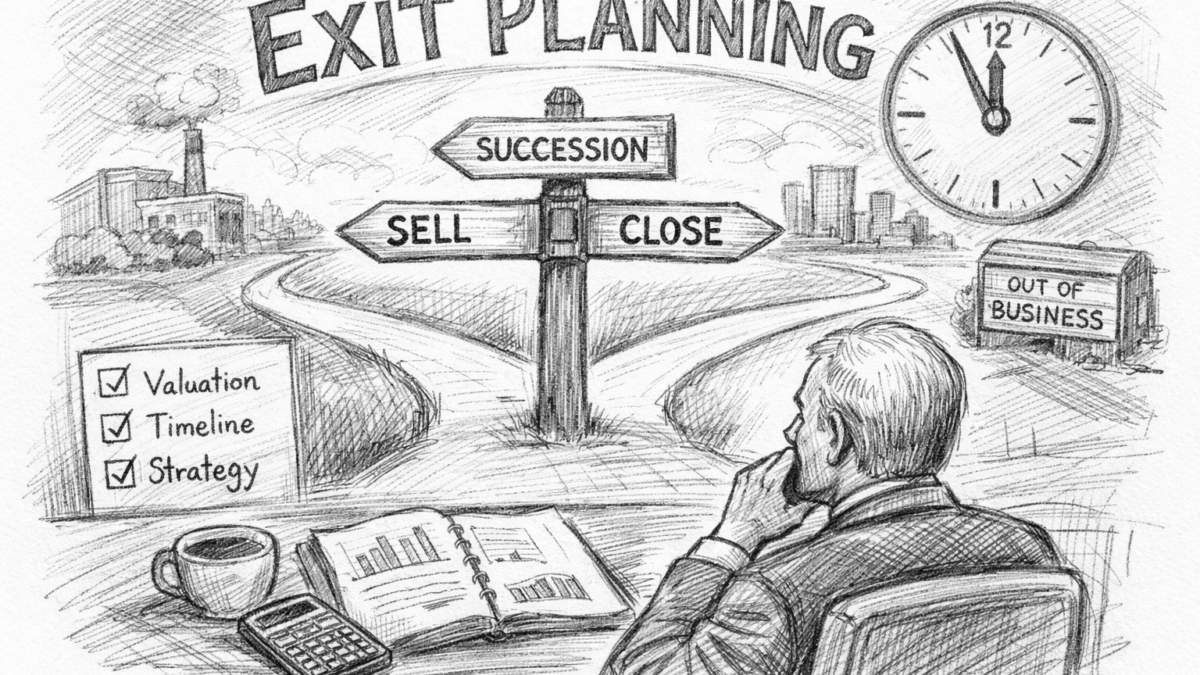
Because every business exits one of three ways: sale, succession, or shutdown .
The only question is whether you’ll decide before the clock does.
Published by the Vision Fox Advisory Team — helping business owners across the U.S. get clear on value, growth, and exit options.