The market doesn’t care about your feelings.
In 2026, it barely even cares about your revenue.
I’ve spent the last decade watching business owners walk into rooms thinking they have a "gold mine," only to realize they’re holding a shovel and a pile of dirt. The reality of the current market is cold.
The "easy money" era is dead. The "desperate buyer" era is buried next to it.
If you are looking to exit your business this year, you aren't just competing against other companies in your zip code. You are competing against a global standard of operational excellence and risk mitigation.
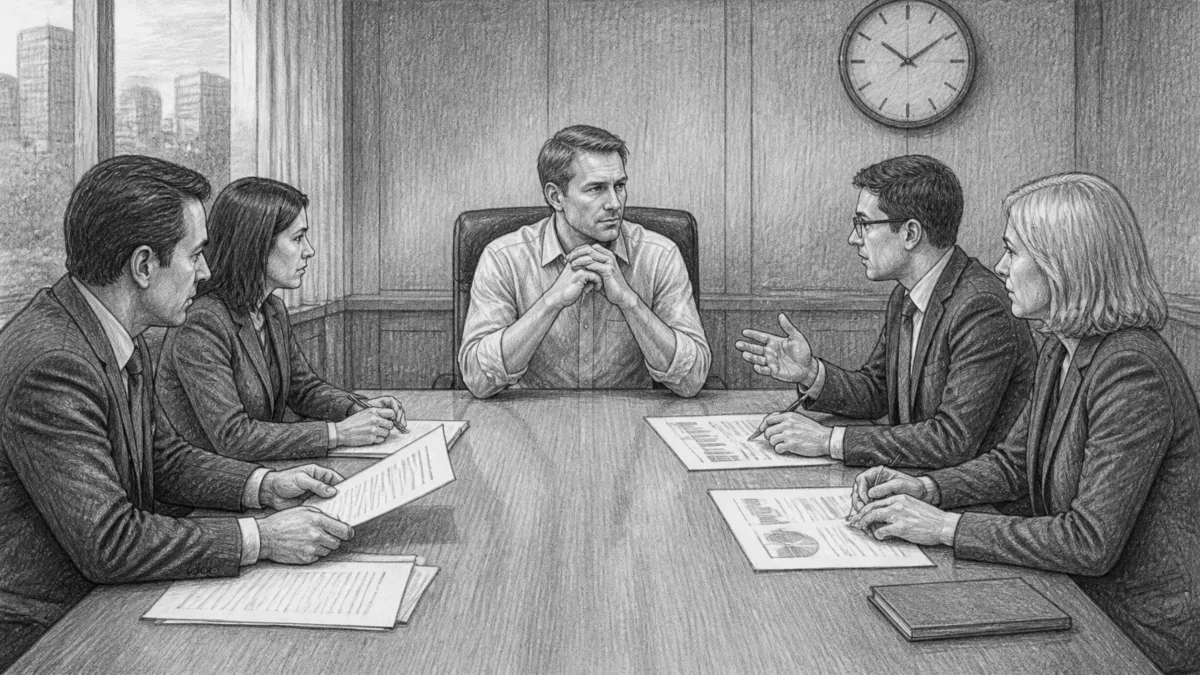
Buyers in 2026 are the most selective I have ever seen in my career as a broker. They aren't buying "potential." They are buying certainty.
If you aren't certain, they aren't buying.
The 2026 Reality Check
We used to talk about "multiples" like they were fixed numbers.
"I’m in HVAC, so I’m worth 4x."
Not anymore.
Today, a business with $2M in EBITDA might be worth 5x, while another business with the exact same revenue is worth 2.5x. Why? Because the first one is a machine, and the second one is a miracle.
Buyers are done gambling on miracles.
They have more inventory to choose from than they did three years ago. They have better data tools to sniff out your "adjusted" earnings. They have less patience for owners who haven't done the work.

Mistake #1: The "Hero" Complex (Operational Risk)
This is the biggest value-killer in the 2026 market.
If you are the most important person in your company, your business is worth nothing to a buyer.
Ask yourself this question right now: What breaks if you disappear for 30 days?
If the answer is "everything," you don't have a business. You have a high-paying, high-stress job that you’re trying to sell to someone else.
Buyers are looking for transferable value.
- They want to see that your sales team doesn't need your "magic touch" to close deals.
- They want to see that your operations manager has the keys to the kingdom.
- They want to see documented processes, not "the way we’ve always done things."
When a buyer sees a business where the owner is the primary rainmaker or the sole problem-solver, they see risk. Risk is expensive. In their mind, the moment you walk out the door, the revenue walks out with you.
They will discount your price to zero or demand a five-year earn-out that keeps you chained to your desk.
Sellability is the measure of how well your business runs without you.
Mistake #2: Sloppy Books and "Creative" Accounting
I’m going to be honest with you: The "tax-minimization" games you played in 2023 are coming back to haunt you in 2026.
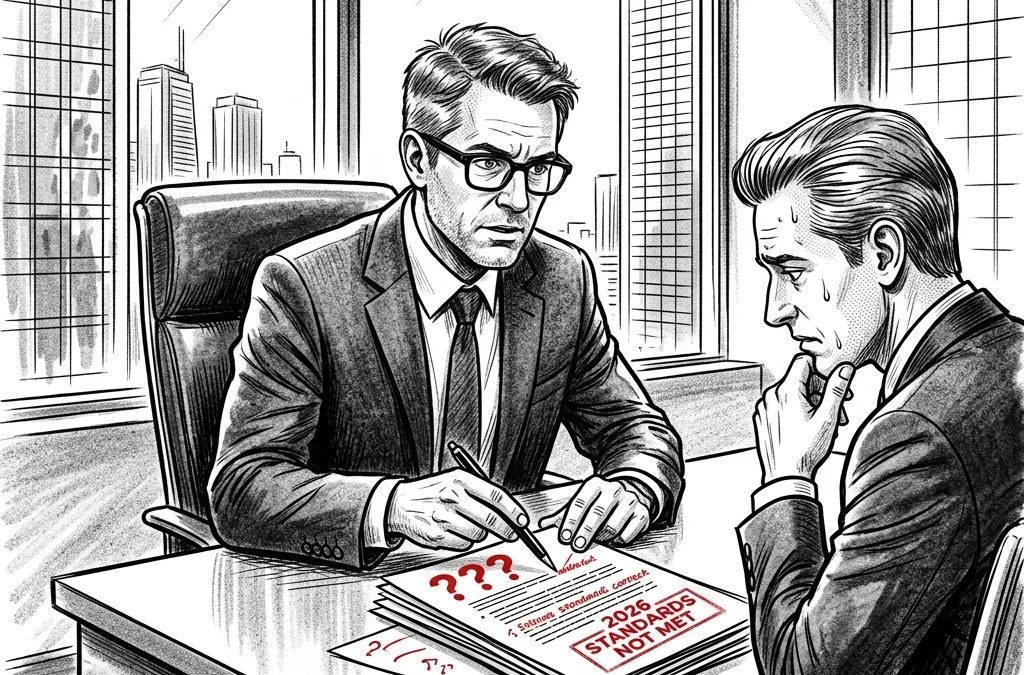
Modern buyers are performing forensic-level due diligence. They aren't just looking at your tax returns; they are looking at your unit economics, your customer acquisition costs, and your churn rates.
If your books are a mess, a buyer assumes your business is a mess.
- Cleanliness is profit.
- Transparency is speed.
If it takes you three weeks to produce a basic P&L, you’ve already lost the buyer’s trust. In this market, once trust is gone, the deal is dead.
Buyers are selective because they can afford to be. They see 50 deals a month. If yours requires them to play detective just to figure out what your real profit is, they will move on to the next one.
You can check out our product catalog for resources on how to tighten these things up before you hit the market.
Mistake #3: Ignoring the "Customer Concentration" Trap
You might love your biggest client. They might represent 40% of your revenue. You might think that relationship is your greatest asset.
A buyer thinks that relationship is a ticking time bomb.
In 2026, buyers are terrified of concentration. If one client can sink the ship, the ship isn't seaworthy.
Selective buyers are looking for a diversified base. They want to see that your revenue is spread across dozens, or hundreds, of accounts. They want to see that no single person's bad mood can bankrupt the company.
If you have high concentration, you need to start diversifying yesterday.

Why 2026 Buyers Are Getting Pickier
It’s not just about the money. It’s about the cost of capital and the abundance of choice.
- Risk Aversion: The global economy has been a roller coaster. Buyers are looking for stability. They want "boring" businesses with predictable cash flows.
- The Talent Gap: It is harder to find good people. If your business doesn't come with a solid team already in place, the buyer knows they’ll have to spend the first year recruiting. They will deduct that cost from your purchase price.
- The Rise of Professional Searchers: We are seeing an influx of "Search Fund" buyers: highly educated, data-driven individuals backed by investors. They don't buy based on "gut feel." They buy based on spreadsheets.

The "Invisible" Mistake: Failing to Plan the Exit
Most owners decide to sell when they are burnt out, bored, or broken.
That is the worst time to sell.
When you are desperate to leave, you make mistakes. You accept bad terms. You ignore red flags in the buyer’s background.
The clock is always ticking. As we say at Before the Clock Decides, you want to make the decision before the situation makes it for you.
Selling a business is a marathon, not a sprint.
If you wait until you're exhausted to start the process, you won't have the stamina to get through due diligence. And trust me, due diligence in 2026 is a meat grinder.
The Sellability Audit: 5 Provocative Questions
If you want to know if you're making these mistakes, stop reading for a second and answer these:
- If you were prohibited from entering your office or checking your email for 90 days, would your profit grow, shrink, or disappear?
- Can you produce an accurate, CPA-reviewed financial statement for last month within 10 days?
- Does your largest customer account for more than 15% of your total revenue?
- Do you have a written, standard operating procedure (SOP) for your most critical business process?
- Why would a smart person buy your business instead of starting their own from scratch for 1/10th the cost?
If you don't like your answers, you have work to do.

Truth over Comfort
I’m a Partner and a Broker. My job is to move businesses. But I’m also a truth-teller.
The truth is that many of you are sitting on "un-sellable" assets.
You’ve built a great life for yourself, but you haven't built a great asset for someone else.
A business is only worth what a buyer is willing to pay. And 2026 buyers are looking for efficiency, scalability, and autonomy.
They don't want to buy your problems. They want to buy your solutions.
If your business is currently a collection of your personal habits and relationships, it’s not a solution. It’s a liability.
Transitioning from "Owner-Centric" to "System-Centric"
This transition doesn't happen overnight. It takes intentionality.
It means hiring people who are smarter than you in specific areas. It means investing in technology that automates the mundane. It means being willing to let go of the "Hero" cape.
I’ve seen owners make this shift in 12 months and double their valuation.
It’s not about working harder. It’s about working on the right things.
You can read more about this philosophy in our featured book or check out some of our reviews to see how others have handled the transition.
Your Move
The 2026 market is unforgiving, but it’s also rewarding for those who prepare.
If you want to be the owner who gets the 5x multiple while everyone else is fighting for scraps, you need to act now.
- Kill the Hero: Identify one task you do every day and delegate it to a team member or a system this week.
- Clean the House: Hire a professional to look at your books. Not your brother-in-law. A pro. Find the "leakage" before a buyer does.
- Review your Risk: Look at your customer list. If you have "whales," start hunting for "minnows" to balance the scale.
Don't let the clock decide your future.
Be intentional. Be prepared. Be sellable.
If you're ready to get serious about your exit, start by looking at our author resources and mapping out your strategy.
The market is waiting. Are you ready for it?